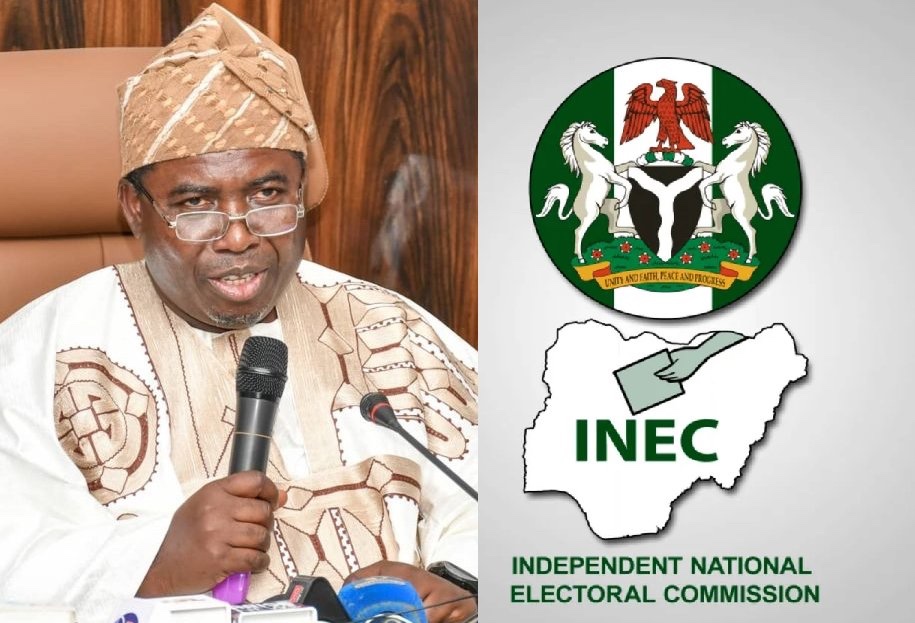
The Senate Committee on Electoral Matters has recommended an additional N30 billion allocation for the Independent National Electoral Commission (INEC) to bolster preparations for the 2027 general elections.
In what smacks of Ramadan diplomacy, President Bola Tinubu, last night, convened members of the Senate for a Ramadan Iftar at the Presidential Villa, Abuja, in a gathering that blended religious observance with quiet political consultation.
The closed-door session, which began after 6.30p.m., provided an informal but strategic interface between the executive and the upper chamber of the National Assembly at a pivotal period in the national calendar.
Human rights lawyer and Senior Advocate of Nigeria (SAN), Olisa Agbakoba, yesterday, renewed his call for urgent reforms to Nigeria’s electoral framework, insisting that the electronic transmission of results must be clearly enshrined in law to safeguard the integrity of future elections.
The proposed N30 billion increase will bring the total election budget to N903.78 billion, from the commission’s initial proposal of N873.78 billion.
The committee noted that the additional fund was specifically earmarked to enhance logistics, strengthen operational capacity and mitigate anticipated challenges inherent in a nationwide polling exercise.
TINUBU’S meeting with the senators came barely 48 hours after the President hosted state governors across party lines for a similar Ramadan Iftar, continuing a pattern of using the holy month as a platform for consensus-building and inter-governmental dialogue.
Senators arrived at the Villa from about 5.55p.m. in four large chauffeur-driven buses and were ushered into the President’s Conference Room ahead of the breaking of fast.
Vice President Kashim Shettima, Chief of Staff to the President, Femi Gbajabiamila and other senior officials joined the President at the gathering.
Although no official readout was issued as of press time, previous Ramadan Iftars hosted by the President have doubled as soft-power engagements, reinforcing cooperation between arms of government and appealing for unity in addressing economic and security challenges.
Agbakoba noted that although the Independent National Electoral Commission (INEC) had issued guidelines providing for electronic transmission, the absence of explicit statutory backing in the Electoral Act created legal uncertainty.
According to him, a Supreme Court ruling invalidated reliance on INEC guidelines where such provisions were not expressly stated in the law, thereby weakening the push for digital transmission.
