Philippines Orders Evacuation of 2,500 Villages as Typhoon Toraji Strikes
The Philippine government on Sunday ordered the evacuation of 2,500 villages as Typhoon Toraji made landfall, the fourth major storm to hit the country in less than a month.
Thousands of residents sought shelter, ports were shut down, and landslides blocked mountain roads as the disaster-prone nation was battered by another cyclone. Typhoon Toraji struck near the town of Dilasag, approximately 220 kilometers (140 miles) northeast of the capital Manila, early Monday, according to the national weather agency.
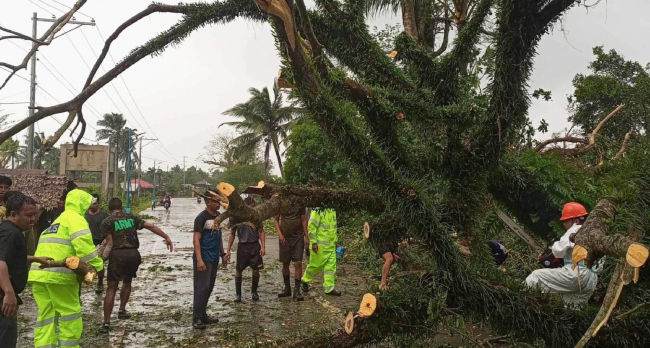
“We’re facing strong winds and heavy rain, with some trees falling and power outages since yesterday,” said Merwina Pableo, civil defense chief in Dinalungan town, near Dilasag.
As of Monday, no casualties had been reported, though provincial rescuers said at least 8,000 people were evacuated from coastal areas and regions prone to flooding and landslides in the provinces of Aurora, Isabela, Ifugao, and Mountain Province.
The typhoon weakened slightly after crossing the Luzon mountain ranges and was moving at 120 kilometers (75 miles) per hour toward the Abra and Ilocos Sur provinces. It is expected to exit into the South China Sea overnight Monday.
Landslides triggered by heavy rains buried key roads in the Cordillera mountain range, complicating rescue and relief efforts. In the central island of Romblon, a passenger ferry ran aground in rough seas, but all 156 passengers and 38 crew members were rescued without injury, according to the coast guard.
The national weather agency had warned of “intense to torrential” rainfall, with up to 200 millimeters (8 inches) expected over a 24-hour period in northern parts of the country. The storm also posed a “moderate to high risk” of storm surges, with waves as high as three meters (10 feet) along the northern coast.
In Dilasag, schoolteacher Glenn Balanag, 31, filmed the fierce winds, which reached speeds of 130 kilometers (80 miles) per hour, knocking over trees and damaging roofs. “The rain is still heavy, and a nearby river is rising,” Balanag said.
Schools and government offices in the hardest-hit areas were closed, while nearly 700 passengers were stranded at ports along the storm’s path. The coast guard warned that sea travel was risky for all types of vessels.
The devastation from Toraji follows a series of recent storms. Typhoon Yinxing, which struck on Thursday, killed at least one person and caused significant damage to homes and buildings. Two previous storms, Severe Tropical Storm Trami and Super Typhoon Kong-rey, together claimed 158 lives.
Authorities are also bracing for a tropical depression that could impact the region by Thursday night, with Tropical Storm Man-yi, currently east of Guam, potentially posing a threat next week.
The Philippines, an archipelago located in a storm-prone region, faces about 20 major typhoons and storms each year. A recent study linked the increasing intensity, frequency, and duration of storms in the Asia-Pacific region to climate change, with storms forming closer to coastlines and intensifying more rapidly.
