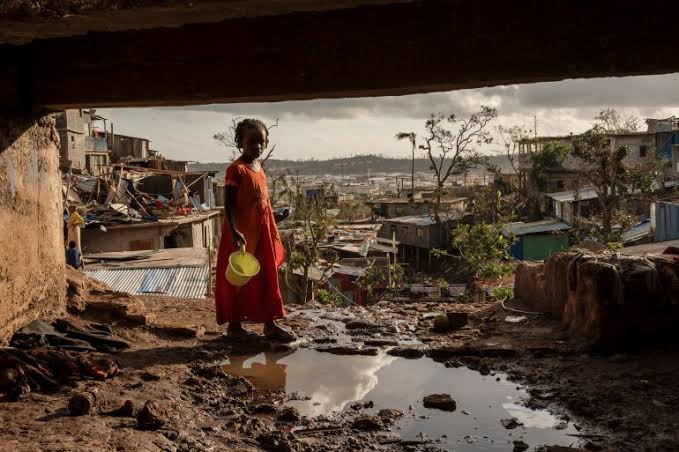
Extreme weather events disrupted the education of approximately 242 million children across 85 countries in 2024, the United Nations children’s agency (UNICEF) revealed Thursday. This equates to one in seven students worldwide, highlighting what the agency called an “overlooked” consequence of the climate crisis.
Heat waves had the most significant impact, according to the report, with UNICEF Executive Director Catherine Russell emphasizing the heightened vulnerability of children to extreme weather.
“Children heat up faster, sweat less efficiently, and cool down more slowly than adults,” Russell explained. “They cannot concentrate in classrooms without relief from sweltering heat, and many cannot attend school if their paths are flooded or schools are destroyed.”
Climate Change and Rising Risks
Decades of human activity, including the unchecked burning of fossil fuels, have fueled global warming, altering weather patterns and intensifying extreme events. In 2024, global average temperatures hit record highs, temporarily surpassing the critical 1.5 degrees Celsius warming threshold.
This warming trend has intensified heatwaves, storms, and floods, leaving populations increasingly vulnerable to disasters. The UNICEF report noted that the 242 million figure is a “conservative estimate,” citing gaps in available data.
From kindergarten to high school, students faced disruptions such as suspended classes, altered school schedules, and damage or destruction of school facilities due to climate shocks.
At least 171 million children were affected by heat waves last year, including 118 million in April alone, as record temperatures swept across Bangladesh, Cambodia, India, Thailand, and the Philippines. In the Philippines, thousands of schools without air conditioning were closed to prevent children from suffering hyperthermia.
Regional Impact and Future Projections
South Asia experienced the most severe climate-related school disruptions, affecting 128 million children. India had the highest number of impacted students—54 million—primarily due to heat waves. In Bangladesh, 35 million children faced similar conditions.
September, a critical month as many schools reopen, saw widespread interruptions. Classes were suspended in 18 countries, particularly after Typhoon Yagi devastated parts of East Asia and the Pacific.
UNICEF warned that these figures are likely to rise as global temperatures continue to increase. Currently, around one billion children—half of the world’s total—live in countries at high risk of climate and environmental shocks.
Projections indicate that if greenhouse gas emissions persist at current levels, by 2050:
• Eight times as many children will face heat waves compared to 2000.
• Over three times as many will experience extreme flooding.
• Nearly twice as many will encounter wildfires.
Long-Term Consequences
UNICEF raised concerns about the long-term impact of these disruptions on education, particularly for girls, who are at greater risk of dropping out of school due to climate-related challenges.
“Already, two-thirds of children worldwide cannot read with comprehension by age 10,” the report noted. “Climate hazards are worsening this reality.”
Catherine Russell warned that education is among the services most frequently disrupted by climate disasters but is often overlooked in policy discussions.
“Children’s futures must be at the forefront of all climate-related plans and actions,” she said.
Call to Action
UNICEF urged governments and international organizations to invest in climate-resilient classrooms and infrastructure to protect education from the growing threat of climate change.