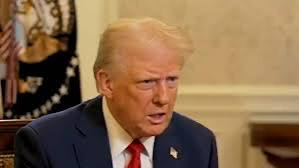
The United States, historically the world’s largest donor, froze nearly all foreign aid on Friday, with exceptions only for emergency food assistance and military funding for Israel and Egypt. This decision came just days after President Donald Trump took office, signaling his “America First” policy to restrict overseas assistance.
In an internal memo obtained by AFP, Secretary of State Marco Rubio instructed staff: “No new funds shall be obligated for new awards or extensions of existing awards until each proposed new award or extension has been reviewed and approved.” The directive affects a broad range of programs, from development aid to military assistance, including support for Ukraine, which had previously received billions in weapons under former President Joe Biden to combat a Russian invasion.
The freeze also puts U.S. funding for PEPFAR, the global anti-HIV/AIDS initiative, on hold for at least several months. Launched in 2003 by President George W. Bush, PEPFAR has been credited with saving 26 million lives, primarily in Africa, and had enjoyed bipartisan support in Washington. However, the memo explicitly exempted military aid to Israel, which has received expanded arms packages following the recent Gaza conflict, and to Egypt, a key U.S. ally since its 1979 peace treaty with Israel.
Additionally, emergency food aid will continue, allowing U.S. contributions to crises such as those in Sudan and Syria.
Democratic Lawmakers Raise Concerns
Democratic lawmakers criticized the freeze, highlighting its potential impact on millions of lives. Representatives Gregory Meeks and Lois Frankel noted that over 20 million people rely on U.S.-funded HIV/AIDS medication through PEPFAR, while 63 million benefit from anti-malaria efforts, such as mosquito nets.
“For years, Republicans in Congress have decried what they see as a lack of U.S. credibility vis-à-vis countries like China, Russia, and Iran,” Meeks and Frankel said in a joint letter. “Now our credibility is on the line, and it appears we will cut and run from American commitments to our partners around the world.”
The lawmakers also emphasized that foreign aid is appropriated by Congress and pledged to push for its implementation.
Aid as a Foreign Policy Tool
The United States has long used foreign assistance as a tool to promote development and counter the influence of nations like China, whose aid often focuses on securing natural resources. In 2023, the U.S. provided over $64 billion in development assistance, according to the Organization for Economic Cooperation and Development, maintaining its status as the top donor in absolute terms.
Rubio, who previously supported development assistance as a senator, justified the freeze, stating that the new administration needed time to assess whether current foreign aid programs were effective, unduplicated, and aligned with Trump’s foreign policy goals. An internal review of all foreign assistance is expected within 85 days.
Humanitarian Impact
Anti-poverty organizations have warned of severe consequences. Oxfam America president Abby Maxman criticized the move, highlighting that foreign aid comprises just 1% of the federal budget but saves lives, fights diseases, educates children, and reduces poverty.
“Suspending and ultimately cutting many of these programs could have life-or-death consequences for countless children and families living through crisis,” Maxman said.
Despite Trump signing an executive order to suspend foreign aid for 90 days earlier in the week, the full scope and implementation of the freeze remain unclear. Critics argue that the decision abandons a long-standing U.S. consensus on the importance of foreign assistance.
