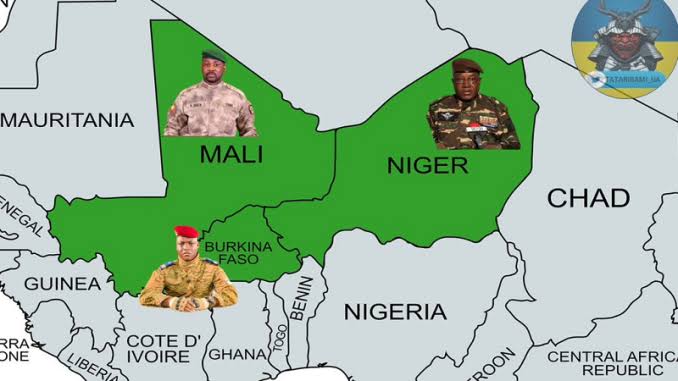
The withdrawal of Mali, Niger, and Burkina Faso from the Economic Community of West African States (ECOWAS) becomes official on Wednesday, marking a significant shift in the region’s political landscape.
The three military-led nations formally notified ECOWAS of their intent to withdraw on January 29, 2024, but the bloc’s rules required a one-year notice period. Despite calls from ECOWAS to extend the period by six months to allow for negotiations, the countries refused, solidifying their departure.
Now aligned as the Alliance of Sahel States (AES), the three nations accuse ECOWAS of imposing “inhuman, illegal, and illegitimate” sanctions following the coups that brought their military regimes to power. They also criticize the bloc for failing to assist them effectively in combating jihadist violence, accusing it of serving the interests of their former colonial ruler, France.
Growing Rift with ECOWAS
The departure comes after the July 2023 coup in Niger, which prompted ECOWAS to threaten military intervention and impose severe economic sanctions—since lifted—on the country. The AES countries now plan to issue a shared passport and establish a unified 5,000-strong army to combat jihadist groups.
The loss of these three founding members weakens ECOWAS’s ability to address regional political crises, according to Gilles Yabi, founder of the West African think tank Wathi. Relations between the AES and ECOWAS nations have become strained, with Niger accusing Benin of harboring jihadist training bases and Nigeria of destabilizing its government—allegations both neighbors deny.
Diplomatic Realignments
The split has reshuffled regional alliances. Togo, acting as a mediator, has strengthened its role by supplying the landlocked AES nations through its port in Lomé. Togo’s foreign minister has even hinted at the possibility of joining the AES, raising concerns about ECOWAS’s future viability if another maritime member exits.
Ghana’s newly elected president, John Dramani Mahama, has also extended an olive branch to the AES, signaling a shift in Ghana’s stance on the military-led regimes. Analysts question whether countries like Ghana can balance relationships with both ECOWAS and the AES.
A Call for Reform
The rupture has sparked debate over ECOWAS’s mission, with some calling for the bloc to return to its economic roots and reconsider its principles on law and democracy. Some suggest the AES could serve as a model for reform, potentially rejoining a restructured ECOWAS in the future.
Despite the division, experts emphasize the importance of maintaining economic and security cooperation between ECOWAS and the AES. Jihadist violence, which has claimed tens of thousands of lives in Mali, Niger, and Burkina Faso, continues to spread to ECOWAS coastal nations like Benin and Togo, underscoring the need for collective action.