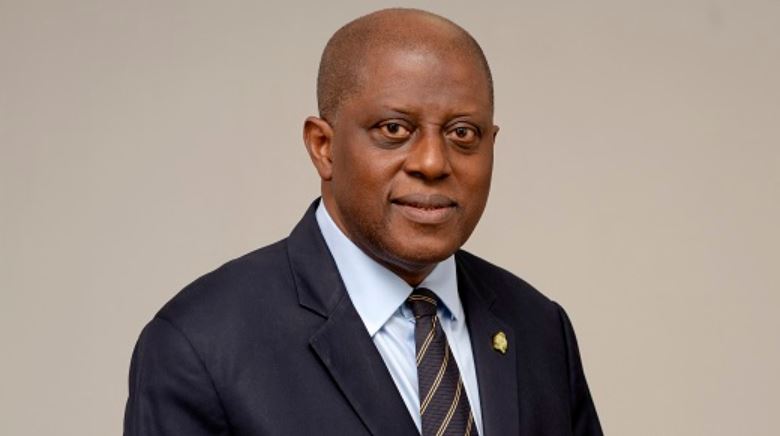
The Governor of the Central Bank of Nigeria (CBN), Olayemi Cardoso, has revealed that without the bank’s decisive policy interventions, inflation in Nigeria could have surged to 42.81% by December 2024.
Speaking at the 2025 Monetary Policy Forum, which gathered key government officials, economic leaders, and private sector stakeholders, Cardoso outlined the CBN’s policy measures in 2024 and reaffirmed its commitment to orthodox monetary policies to curb inflation in 2025.
According to Cardoso, the CBN took bold steps throughout 2024 to stabilize the economy, including raising the Monetary Policy Rate (MPR) by 875 basis points to 27.50%, increasing the Cash Reserve Ratio (CRR) for Other Depository Corporations by 1,750 basis points to 50%, and adjusting the asymmetric corridor around the MPR. These measures, he stressed, were critical in preventing a sharper rise in inflation and ensuring macroeconomic stability.
Cardoso also highlighted key foreign exchange (FX) reforms, which contributed to improved market efficiency and confidence. Among these were the unification of multiple exchange rate windows, leading to a 79.4% rise in diaspora remittances via International Money Transfer Operators, reaching $4.18 billion in the first three quarters of 2024, up from $2.33 billion in 2023. Other major FX-related interventions included clearing a $7 billion FX backlog, which restored market confidence and improved liquidity, lifting restrictions on 41 items that had been barred from the official FX market since 2015, and introducing new minimum capital requirements for banks, effective March 2026, to enhance resilience and global competitiveness.
The CBN also launched the WIFI initiative under the National Financial Inclusion Strategy, focusing on bridging the gender gap in financial access by empowering women with financial services, education, and digital tools. Additionally, the Nigeria Foreign Exchange Code was introduced to enhance transparency, integrity, and efficiency in the FX market, ensuring that financial institutions operate under globally accepted standards.
Looking ahead, Cardoso emphasized the need for strong policy coordination between fiscal and monetary authorities to sustain disinflation efforts amid economic shocks. He expressed optimism that Nigeria had turned a corner, with disinflation becoming achievable, but stressed that investor confidence in Nigeria’s macroeconomic reforms would determine the country’s ability to attract foreign capital.
The CBN’s shift from unorthodox to orthodox monetary policies, he concluded, is designed to restore confidence, strengthen credibility, and prioritize price stability, positioning Nigeria for long-term economic growth.