The Federal Government has launched an ambitious energy access programme requiring $23.2 billion in investment, with $15.5 billion expected from the private sector.
A statement from Bolaji Tunji, spokesperson for the Minister of Power, Adebayo Adelabu, confirmed that the initiative, called the National Energy Compact, was a key outcome of the Mission 300 Africa Energy Summit held in Dar es Salaam, Tanzania.
The two-day summit, hosted by the Tanzanian government, the African Union, the African Development Bank, and the World Bank, aimed to fast-track electricity access for 300 million Africans by 2030.
Under Nigeria’s National Energy Compact, the government aims to increase electricity access from 4% to 9% annually, boost access to clean cooking solutions from 22% to 25% annually, expand renewable energy’s share in power generation from 22% to 50%, and mobilize $15.5 billion in private investment to drive last-mile electrification.
Tunji emphasized that the initiative aligns with UN Sustainable Development Goal 7, which focuses on universal access to modern energy services.
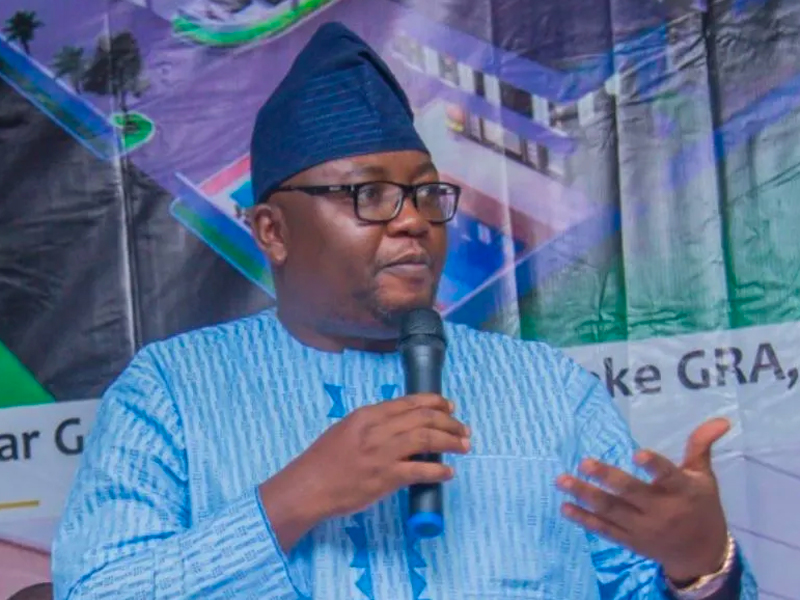
Speaking at the unveiling of the programme, Minister Adelabu reiterated Nigeria’s commitment to achieving universal energy access by 2030, with 150 million Nigerians already electrified.
However, he highlighted challenges such as vandalism of power infrastructure, including transmission towers and distribution networks, grid instability leading to frequent collapses, and investment hesitancy due to power sector disruptions.
The minister stressed that protecting power infrastructure is crucial, adding that the government is ramping up security, stricter penalties, and surveillance technologies to tackle vandalism.
To achieve Nigeria’s electrification targets, Adelabu noted that substantial investments are required. The government plans to prioritize private sector involvement to unlock additional resources for expanding power generation, strengthening transmission and distribution networks, and integrating renewable energy solutions.
With Nigeria still struggling with 4,500 megawatts (MW) of power, efforts to increase capacity to 6,000MW in 2024 failed due to vandalism and grid failures.
Adelabu urged development partners, philanthropies, and investors to support the government’s transformative journey, emphasizing that Nigeria’s commitment to energy reforms will play a pivotal role in Africa’s energy transition.
As the Mission 300 initiative gains momentum, Nigeria’s push for sector-wide reforms, infrastructure expansion, and investment mobilization will be key to shaping electricity access across the continent.
