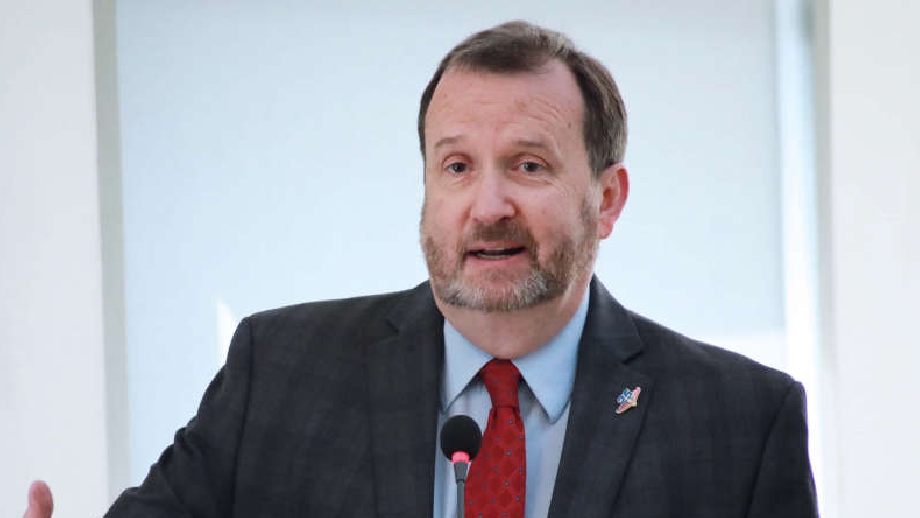
The United States government has announced that Nigerian deportees will be repatriated to Lagos, with convicted prisoners among the first group to be deported.
US Ambassador to Nigeria, Richard Mills Jr., made this disclosure during a meeting with Nigeria’s Minister of State for Foreign Affairs, Ambassador Bianca Odumegwu-Ojukwu.
Convicted Prisoners to Be Deported First
Mills Jr. emphasized that all deportees would be returned to Lagos, ruling out alternative locations such as Port Harcourt or Abuja.
“The first group will be convicted prisoners. Those who committed crimes and are in US prisons. Some of them have violated US immigration laws, appealed, but were denied. Yet, they are still in the US. They have committed immigration crimes and have been ordered to leave,” he stated.
Concerns Over Deportation Process
In response, Ambassador Odumegwu-Ojukwu urged the US government to follow international conventions in deportation procedures, emphasizing the need for a dignified process.
She also called on the US government to consider measures to ease the trauma for deportees, particularly by granting them sufficient time to retrieve their assets in the US before repatriation.
“With the new administration in the US, we want a situation where there will be commitments. If there will be repatriation, we want a dignified return,” she said.
The minister expressed concerns about the impact of deportation on families in Nigeria who depend on remittances from relatives in the US.
“At the moment, we’re told that about 201 Nigerian nationals are in US immigration camps, and about 85 have been cleared for deportation.
“Will they be given time to handle their assets, or will they just be bundled onto planes and repatriated? This will be especially traumatic for those who have not committed violent crimes,” she stated.
Potential Suspension of Drop Box Visa System
The minister also raised concerns about the potential suspension of the US Drop Box Visa system, urging Washington to issue a clear statement to address the worries of Nigerians who frequently travel for legitimate reasons.
She highlighted the concerns of approximately 14,000 Nigerian students studying in the US, whose parents in Nigeria fear potential policy changes that could affect them.
Odumegwu-Ojukwu also expressed uncertainty regarding the future of the United States Agency for International Development (USAID), emphasizing the need for clarity on humanitarian support in Nigeria and Africa.
Strengthening Nigeria-US Relations
The minister called for stronger bilateral relations between Nigeria and the US, particularly in trade and investment. She emphasized the need for diversification, particularly in Nigeria’s mining sector, to boost exports to the US.
She also advocated for the reactivation of the ‘Silent Secretariat,’ a platform where both nations assess their bilateral relations.
Highlighting President Bola Ahmed Tinubu’s 4-Ds foreign policy (Democracy, Development, Demography, and Diaspora), she underscored the government’s commitment to citizen diplomacy, ensuring the welfare of Nigerians abroad.
“One other area is not just diaspora but diplomacy, people-to-people contacts. The issue of illegal migration is there, but the current administration is determined to prioritize citizen diplomacy. We want to know how our people in the diaspora are doing. Some are in prisons abroad, and the administration is concerned about their welfare,” she said.
She further stressed the importance of strategic partnerships to address Nigeria’s demographic challenges, particularly unemployment, which has fueled the trend of illegal migration, commonly referred to as the “Japa syndrome.”
US Assures on Drop Box Visa and USAID
In response, Ambassador Mills assured that the Drop Box Visa Policy had not been suspended, explaining that policy reviews often accompany changes in administration.
He also acknowledged concerns regarding USAID, noting that its role in humanitarian efforts, particularly in health and maternal-child care, was being reviewed.
The envoy further expressed concerns over democracy in Africa, citing the exit of three Sahel states from ECOWAS and the growing challenge of counter-terrorism.
