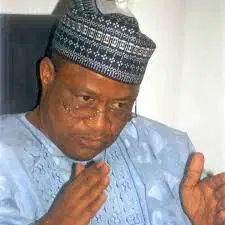
Former military president, General Ibrahim Babangida, retd, has said that former Head of State, Major General Muhammadu Buhari, retd, was overthrown in 1985 because he personalised leadership.
Sunday Vanguard recalls that Buhari was one of the leaders of the military coup of December 1983 that toppled ex-President Shehu Shagari.
But 40 years after Babangida seized power from Buhari through a palace coup, the former military administrator who ruled for eight years between 1985 and 1993, said Buhari and his deputy, the late Brigadier Tunde Idiagbon, displayed a “holier-than-thou” attitude, which led the country to a brink.
Babangida, who revealed this in his book: ‘A Journey in Service’, explained that Buhari opposed the civil populace and his constituency, the military.
Change in leadership was necessary
His words: “The change in leadership had become necessary as a response to the worsening mood of the nation and growing concern about our future as a people. All through the previous day, as we flew from Minna and drove through Lagos towards Bonny Camp, I was deeply reflecting on how we as a nation got to this point and how and why I found myself at this juncture of fate. By the beginning of 1985, the citizenry had become apprehensive about the future of our country.
The atmosphere was precarious and fraught with ominous signs of clear and present danger. It was clear to the more discerning leadership of the armed forces that our initial rescue mission of 1983 had largely miscarried.
We now stood the risk of having the armed forces split down the line because our rescue mission had largely derailed. If the armed forces imploded, the nation would go with it, and the end was just too frightening to contemplate. Divisions of opinion within the armed forces had come to replace the unanimity of purpose that informed the December 1983 change of government.
In state affairs, the armed forces, as the only remaining institution of national cohesion, were becoming torn into factions; something needed to be done lest we lose the nation itself. My greatest fear was that division of opinion and views within the armed forces could lead to factionalisation in the military. If allowed to continue and gain root, grave dangers lay ahead.
Antagonise the civil populace
“My predecessor in office, Major General Muhammadu Buhari, and his deputy, Brigadier Tunde Idiagbon, had separated themselves from the mainstream of the armed forces by personalising what was initially a collective leadership. They both posited a ‘holier than thou’ attitude, antagonising the civil populace against the military. Fundamental rights and freedoms were being routinely infringed upon and abused. As a military administration, we were now presiding over a society that was primarily frightened of us. We were supposed to improve their lives and imbue the people with hope for a better future.
