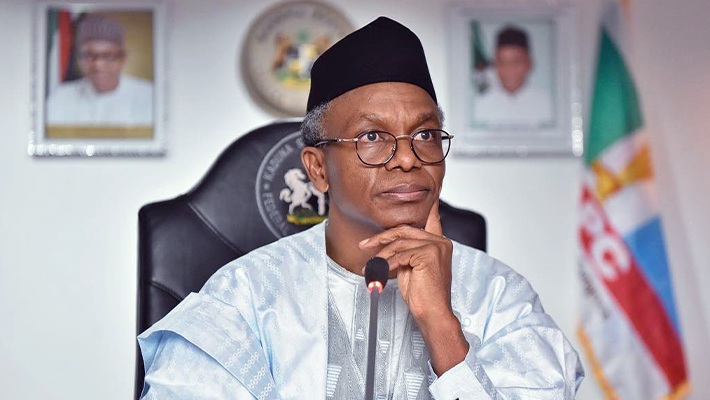
The Federal High Court in Kaduna has ordered the interim forfeiture of N1.37 billion allegedly misappropriated from the Kaduna State Government’s coffers and funneled into a private account.
The funds were part of the budget for a failed light rail project under the administration of former Governor Nasir El-Rufai, who governed Kaduna State from 2015 to 2023. The Independent Corrupt Practices and Other Related Offences Commission (ICPC) traced the diverted sum and sought the forfeiture in court.
Court Ruling and Legal Proceedings
On 28 February, Justice H. Buhari granted the forfeiture order following an ex parte application by the ICPC. The anti-graft agency had filed the motion on 14 February, aiming to recover the allegedly misused funds. According to the ICPC, the El-Rufai administration failed to execute the light rail project, depriving Kaduna residents of its intended transportation benefits.
In a significant directive, the judge also ordered the ICPC to publish a notice in two national newspapers, inviting any parties with legitimate claims to the funds to present their case before the court. The next hearing is scheduled for 8 April 2025.
How the Funds Were Diverted
The investigation revealed that the funds were siphoned through Indo Kaduna MRTS JV Nig. Ltd., a joint venture formed in 2016 between the Kaduna State Government and Indian investors. The ICPC’s findings indicate that even before the company was officially incorporated on 10 May 2017, the El-Rufai administration had already approved payments to it, beginning in December 2016.
Records show that between December 2016 and January 2017, the state government disbursed N11.1 billion to MRTS JV Nigeria’s Sterling Bank account. Out of this amount, N1.373 billion was allegedly diverted into a private account, now under court-ordered forfeiture.
ICPC’s Justification for Forfeiture
In its application, the ICPC, through its chairman Musa Aliyu, emphasized that the forfeited funds should be redirected to public projects in Kaduna State. The commission assured that this measure serves the greater public interest and does not infringe on any individual’s constitutional rights.
Origins of the Investigation
The investigation was prompted by a petition from M. Yahaya, a lawyer from NUS’ AB Chambers, Abuja. Dated 27 June 2024 and received by the ICPC on 1 July 2024, the petition highlighted large-scale misappropriation of public funds by officials in the El-Rufai administration.
Ongoing Investigations and Reactions
Several officials from Nasir El-Rufai’s administration are currently facing corruption-related charges at the Economic and Financial Crimes Commission (EFCC), the ICPC, and the Code of Conduct Tribunal. Meanwhile, the Kaduna State Government has launched additional investigations into alleged financial misconduct by former state executives.
However, El-Rufai and his former aides have denied any wrongdoing, claiming that the ICPC’s actions amount to political persecution and could deter foreign direct investment in the state.
Conclusion
The case remains a major development in Nigeria’s anti-corruption drive, with its outcome likely to set a precedent for holding public officials accountable for financial mismanagement. As the 8 April hearing approaches, all eyes will be on the court’s final decision regarding the fate of the allegedly diverted funds.