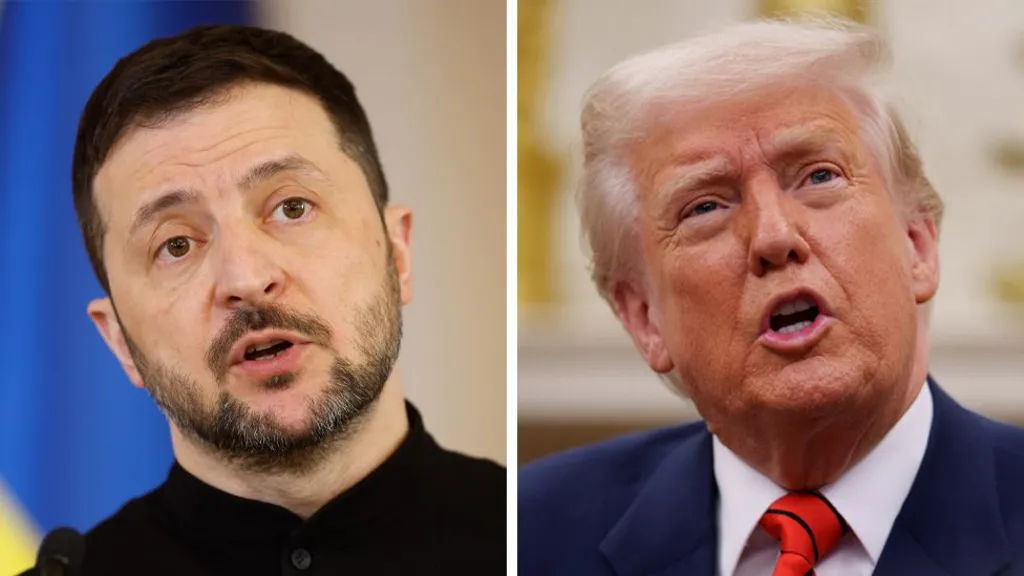
In a significant diplomatic development, US President Donald Trump held an hour-long phone conversation with Ukrainian President Volodymyr Zelensky, discussing key issues including a potential US role in managing Ukraine’s nuclear power plants. This discussion comes just a day after Trump’s phone call with Russian President Vladimir Putin.
US-Ukraine Talks on Peace and Energy Infrastructure
Following the call, Zelensky expressed optimism, stating that he believes “lasting peace can be achieved this year” under Trump’s leadership. A major topic of discussion was Ukraine’s energy security, with the White House later confirming that the possibility of US involvement in Ukraine’s nuclear power plants was raised. However, Zelensky clarified that the conversation focused only on the Russian-occupied Zaporizhzhia facility.
Contrast with Previous White House Meeting
The tone of this exchange marks a notable shift from Zelensky’s previous visit to the White House, where he and Trump, alongside US Vice-President JD Vance, had a tense exchange. Wednesday’s call was the first direct communication between the two leaders since then, although their respective teams have met in Saudi Arabia to discuss a 30-day ceasefire proposal.
Despite backing from the US and Ukraine, the proposed ceasefire was rejected by Putin during his earlier call with Trump.
Ceasefire Talks and Ongoing Conflict
During his call with Trump, Zelensky indicated openness to a partial ceasefire, specifically concerning strikes on energy infrastructure, railways, and ports. However, he warned that Ukraine would retaliate if Moscow violated the terms.
“Until we agree with Russia and formalize a document, I think everything will continue to fly—drones and missiles,” Zelensky stated.
Trump later posted on Truth Social that the conversation aimed to align Ukraine and Russia “in terms of their requests and needs,” reinforcing that ceasefire efforts were progressing.
US to Assist Ukraine with Air Defense and Energy Infrastructure
US Secretary of State Marco Rubio detailed further commitments, announcing that Trump had agreed to help Ukraine source additional air defense systems, particularly from Europe. Additionally, Rubio confirmed that the leaders discussed Ukraine’s electrical supply and nuclear facilities, with Trump suggesting that “American ownership of those plants would be the best protection for that infrastructure and support for Ukrainian energy security.”
Zelensky later clarified that while nuclear energy was discussed, the primary focus was on the Zaporizhzhia facility, currently under Russian control.
Diplomatic and Military Implications
This call brings some reassurance to Zelensky, who described the discussion as “positive, frank, and very substantive.” He reiterated his belief that a resolution with US leadership remains possible this year.
Meanwhile, tensions remain high as Ukraine and Russia continue hostilities. Although Putin agreed to halt attacks on Ukraine’s energy infrastructure during his call with Trump, he maintained that a full ceasefire would require Ukraine’s Western allies to cease military support—a condition Kyiv and its European partners have firmly rejected.
Following these talks, both countries launched renewed attacks, with Ukraine accusing Russia of targeting hospitals, while Russian officials reported a Ukrainian drone strike on an oil depot in the Krasnodar region.
Prisoner Exchange Amidst Conflict
Despite ongoing hostilities, both sides conducted a major prisoner swap, each releasing 175 prisoners of war. Zelensky hailed it as “one of the largest” exchanges, highlighting Russia’s release of an additional 22 severely wounded Ukrainian soldiers.
What’s Next?
Technical teams from Ukraine and the US are set to meet in Saudi Arabia in the coming days to further negotiations. As diplomatic efforts continue, the international community watches closely to see whether Trump’s strategy will bring an end to the prolonged conflict or lead to further complications.
