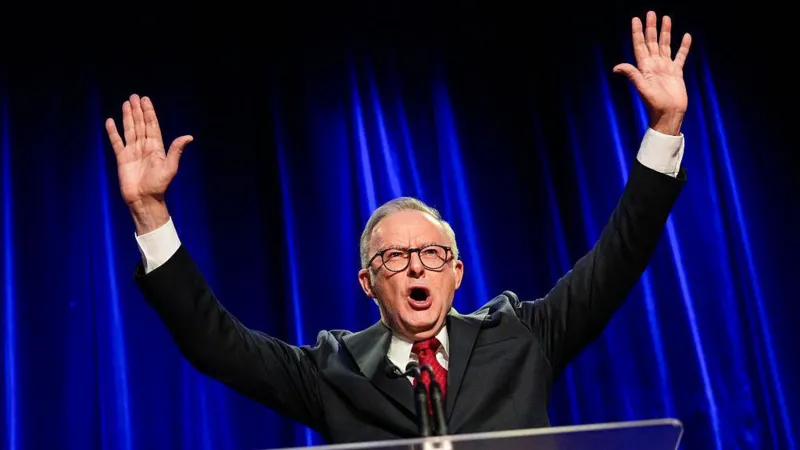
Prime Minister Anthony Albanese has led the Labor Party to a resounding landslide victory in the 2025 Australia federal election, defying the global trend of first-term governments being voted out. This dramatic win solidifies Albanese’s position as one of the few Australian leaders to secure back-to-back election victories in over two decades.
Although official vote counting will continue for days, projections suggest a significant expansion of Labor’s majority, as the conservative Liberal-National coalition suffered a nationwide collapse.
“Today, the Australian people have voted for Australian values: for fairness, aspiration and opportunity for all; for the strength to show courage in adversity and kindness to those in need,” Albanese declared during his victory speech.
Peter Dutton Concedes, Takes Responsibility for Coalition Defeat
Peter Dutton, leader of the Coalition and former Opposition Leader, not only failed to return his party to power but also lost his seat of Dickson after 24 years. He accepted full responsibility and apologized to fellow MPs.
“We have been defined by our opponents in this election which is not a true story of who we are, but we will rebuild from here,” Dutton said.
The Coalition’s campaign was plagued by gaffes, policy reversals, and voter skepticism over Dutton’s perceived alignment with Trump-style politics, particularly on issues like immigration and public sector cuts.
Labor Surges Nationwide as Voters Back Stability
The Labor Party is projected to finish with around 86 seats, up from 77. The Coalition trails with about 40 seats, while the Greens and independents pick up the rest, according to the Australian Broadcasting Corporation (ABC).
Labor’s gains are significant, marking a rare national swing toward a sitting government and signaling a shift in voter sentiment from the fragmented results of 2022.
Albanese said the win was a mandate to push forward with key policies on climate change, healthcare affordability, housing access, and First Nations reconciliation.
Key Issues That Shaped Australia Election 2025
The five-week campaign was dominated by cost-of-living pressures, especially around housing and universal healthcare, both of which Albanese vowed to address.
The Prime Minister also renewed commitments on:
- Climate action
- Cheaper GP appointments
- Support for homebuyers
- Protecting the environment
- Closing the Gap for Indigenous Australians
“We will be a stronger nation when we Close the Gap between Indigenous and non-Indigenous Australians,” Albanese said, referencing the failed 2023 Voice referendum.
Global and Domestic Challenges Influenced Voter Mood
Albanese’s resurgence comes after a rocky year marked by economic strain, international tensions, and growing discontent at home. His low polling numbers earlier in 2025 led many to believe he would fall victim to the so-called “incumbency curse.”
Meanwhile, Dutton was poised for a political comeback until a misfired campaign, internal divisions, and missteps—like accidentally hitting a cameraman with an AFL ball—turned public sentiment against him.
“The opposition has been shambolic,” said Emeritus Prof John Warhurst of the Australian National University.
Coalition Faces Identity Crisis After Election Defeat
This latest result deepens the Coalition’s existential crisis. With Dutton stepping down, questions loom over the party’s future direction, especially after critics warned against its hard-right shift.
“We delude ourselves that we are just a few tactical devices away from winning an election,” said former strategist Tony Barry, calling for an urgent rethink.
What Next for Labor and Australia?
Labor now has a solid mandate and public trust, but expectations are high. Analysts say Albanese must now move from a centrist campaign to bold governance, using the political capital gained in the 2025 federal election to enact transformative policies.
“The question now is: ‘Will Labor actually do something with power?’” said political analyst Amy Remeikis.
