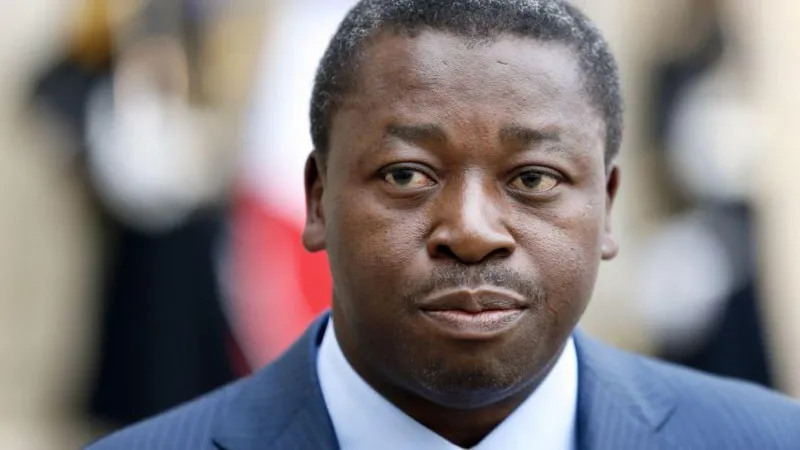
Faure Gnassingbé has been sworn in as the President of the Council of Ministers in Togo—a newly created position that now stands as the highest office in the country’s executive branch. Notably, this role comes with no term limits, sparking widespread concern among opposition figures and civil society.
The move follows a sweeping constitutional reform in Togo that abolished presidential elections and established a parliamentary system, a major shift in the country’s political landscape.
Opposition leaders argue that this change is a strategic ploy designed to allow President Gnassingbé to remain in power indefinitely, further extending the Gnassingbé family’s 58-year rule in the West African nation. Faure Gnassingbé assumed office in 2005 after the death of his father, Gnassingbé Eyadéma, who ruled for nearly 40 years.
The new constitution, passed by lawmakers last year, has been criticized by many as an “institutional coup d’état.” Although the government temporarily paused the reforms in response to public outcry, it has now pressed forward with implementing the changes.
Under the new structure, the President of the Republic becomes largely ceremonial, while real executive power lies with the Council President—now occupied by Faure Gnassingbé. Analysts say this shift makes his grip on power even stronger than before.
The Union for the Republic party, led by Gnassingbé, secured a near-total sweep in last year’s parliamentary elections, winning 108 of 113 seats in the National Assembly. With this majority, the path was clear for the controversial constitutional overhaul.
The upcoming municipal elections in Togo, scheduled for July, will be the first held under this new system.
