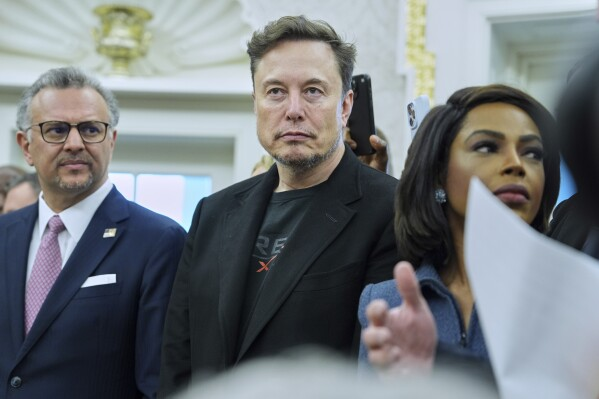
Elon Musk, the world’s richest man and CEO of Tesla and SpaceX, has announced his departure from the Trump administration after playing a key role in efforts to reduce the size and spending of the US federal government. Musk’s exit from the White House comes amid his growing public criticisms of the administration’s legislative agenda, particularly its latest multi-trillion dollar budget bill.
In a message posted on his social media platform X, Musk expressed gratitude to former President Donald Trump for the opportunity to help lead the Department of Government Efficiency (Doge), a special initiative focused on cutting government waste. “As my scheduled time as a Special Government Employee comes to an end, I would like to thank President @realDonaldTrump for the opportunity to reduce wasteful spending,” Musk wrote. “The @DOGE mission will only strengthen over time as it becomes a way of life throughout the government.”
Musk’s role, which allowed him to serve as a special government employee for up to 130 days a year, had a temporary tenure that was expected to conclude toward the end of May. The White House began “offboarding” Musk on Wednesday evening, according to BBC sources.
However, Musk’s departure closely followed his public expression of disappointment with the Trump administration’s budget bill. The bill, touted by Trump as a “big, beautiful bill,” proposes massive tax cuts and increased defense spending — moves Musk says will expand the federal deficit and undermine the efforts of Doge. In an interview with CBS Sunday Morning, Musk remarked, “I think a bill can be big or it could be beautiful, but I don’t know if it could be both.”
During his tenure, Musk had pledged initially to cut “at least $2 trillion” from federal spending, but later scaled back that target to $150 billion. The Doge initiative has led to an estimated reduction of 260,000 jobs out of the 2.3 million federal civilian workforce, through layoffs and voluntary redundancies. Some of these workforce cuts faced legal challenges, with federal judges ordering reinstatement of some employees.
The aggressive and rapid workforce reductions also resulted in mistakes, including the erroneous termination of workers involved in sensitive areas such as the US nuclear program. Musk had publicly voiced frustration over the criticism Doge faced, telling the Washington Post, “Doge is just becoming the whipping boy for everything. Something bad would happen anywhere, and we would get blamed for it even if we had nothing to do with it.”
Musk’s exit from his government role coincides with significant challenges for Tesla. The company reported a 13% drop in sales during the first quarter of this year — the largest quarterly decline in its history. Tesla’s stock price plummeted as much as 45% before partially recovering. Musk acknowledged that political opposition has contributed to a decline in demand and said on a recent earnings call that he would be dedicating “far more” of his time back to Tesla.
Activists have targeted Tesla with boycotts, protests, and acts of vandalism, leading US Attorney General Pam Bondi to classify some of these incidents as “domestic terrorism.” Speaking at an economic forum in Doha, Qatar, Musk reaffirmed his commitment to Tesla’s leadership for the next five years. He also indicated plans to scale back his political donations, having spent nearly $300 million supporting Trump and other Republicans last year.
As Musk transitions out of the White House, questions remain about the future of Doge and how the government will sustain efforts to curb wasteful spending without its high-profile advocate.
