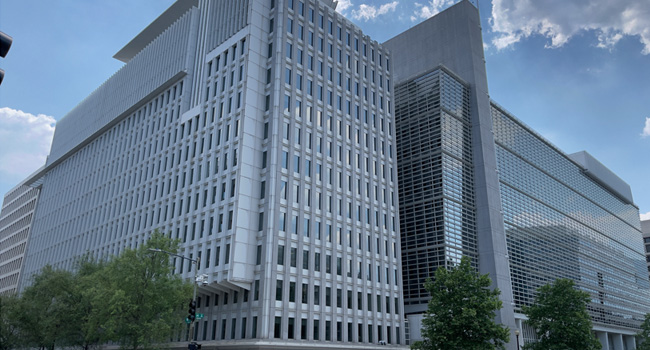
In a major policy shift, the World Bank has officially lifted its long-standing ban on nuclear energy financing, marking a return to the sector for the first time in decades. The move is part of a broader strategy to address rising electricity demand in developing countries.
World Bank President Ajay Banga made the announcement in an internal email to staff on Wednesday, saying the institution will now re-engage with nuclear energy development while ensuring strict compliance with international safety and non-proliferation standards.
“We will work closely with the United Nations nuclear watchdog, the International Atomic Energy Agency (IAEA), strengthening our ability to advise on non-proliferation safeguards and regulatory frameworks,” Banga said.
According to the memo obtained by AFP, electricity demand in developing nations is set to more than double by 2035, prompting the World Bank to significantly expand its energy financing efforts.
READ ALSO: US Appeals Court Allows Trump Tariffs To Remain Longer
To meet this demand, the bank estimates that annual investment in energy generation, grids, and storage will need to increase from the current $280 billion to approximately $630 billion.
“We will support efforts to extend the life of existing reactors in countries that already have them, and help support grid upgrades and related infrastructure,” Banga added.
The World Bank will also explore the potential of Small Modular Reactors (SMRs), aiming to make them a viable energy solution for more countries.
This strategic pivot reflects Banga’s vision since assuming leadership of the Washington-based development lender in 2023. His approach emphasizes energy access, sustainability, and development flexibility.
“The goal is to help countries deliver the energy their people need, while giving them the flexibility to choose the path that best fits their development ambitions,” he said.
In addition to nuclear energy, the World Bank reaffirmed its commitment to:
- Improving grid performance
- Financing the retirement or repurposing of coal plants
- Supporting carbon capture for industrial and power sectors
The shift in policy follows comments made in April by US Treasury Secretary Scott Bessent during the IMF–World Bank Spring Meetings, where he urged the bank to prioritize dependable energy technologies over “distortionary climate finance targets.” His remarks hinted at renewed support for fossil fuels, including gas, alongside nuclear.
Bessent also praised the bank’s efforts to eliminate restrictions on nuclear financing at the time.
Despite the progress, Banga noted that the World Bank has not yet reached consensus within its board regarding upstream gas engagement and under what conditions such investments may proceed.
The United States, the bank’s largest shareholder, has been a vocal advocate for ending the nuclear funding ban, aligning with the current administration’s broader energy diversification agenda.
