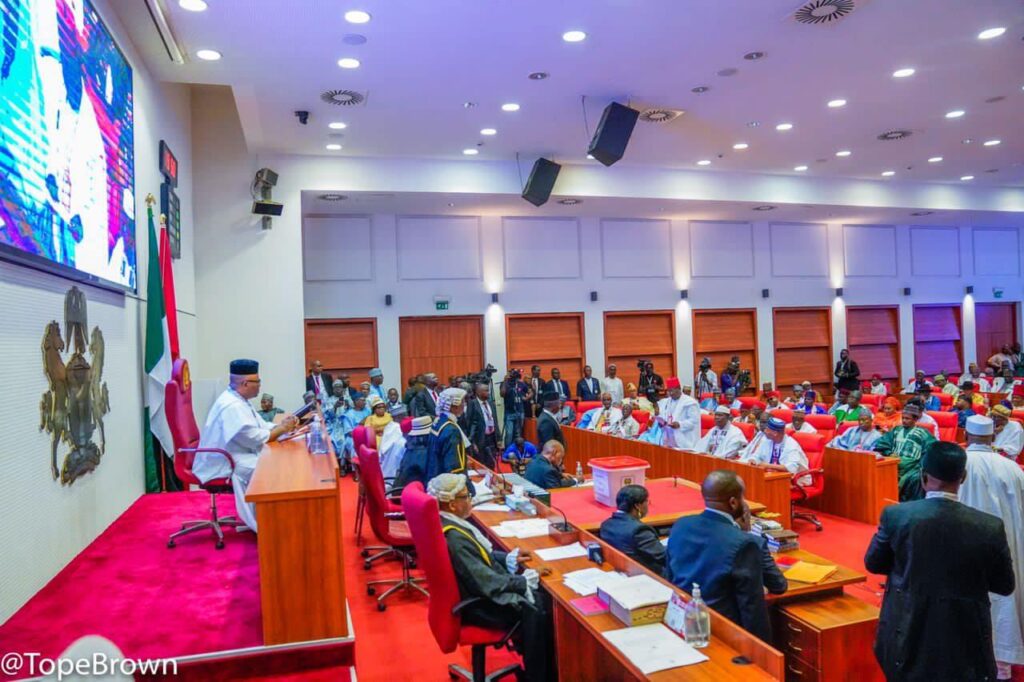
The Nigerian Senate on Monday hosted African diplomats in Abuja for a landmark diplomatic forum focused on the lingering legacies of colonial exploitation, the repatriation of looted artefacts, and the quest for reparative justice across the continent.
The session, convened by the Senate Committee on Reparation and Repatriation, brought together lawmakers and envoys from across Africa to deliberate on confronting the deep scars left by slavery, plunder, and centuries of foreign subjugation.
In his opening remarks, Committee Chairman, Senator Ned Nwoko, emphasized the need for African nations to collectively demand restitution—not only in the form of stolen cultural property but also in symbolic and economic redress for historical injustices.
“The trauma of colonisation still lives in our systems, our economies, and our fragmented identities,” Nwoko said. “We must reclaim not just our artefacts but our dignity and collective future.”
Representing Senate President Godswill Akpabio, Senate Chief Whip, Senator Tahir Mongunu, reinforced this message, declaring that reparations and repatriation are no longer fringe debates but central to global justice movements.
“Africa must seize the momentum,” Mongunu urged. “The Nigerian Senate is prepared to provide legislative support for diplomatic efforts that address these long-standing injustices.”
Diplomats from Egypt, Tanzania, and Zimbabwe also addressed the gathering, sharing country-specific experiences of cultural loss and ongoing struggles to reclaim heritage stolen during colonial rule.
Egypt’s Ambassador to Nigeria, Mohammed Fouad, decried the continued display of Egyptian antiquities in Western museums, affirming Africa’s right to reclaim its stolen treasures.
Tanzania’s Ambassador, Selestine Kekele, highlighted Germany’s partial return of human remains but lamented the continued retention of high-value artefacts, such as dinosaur fossils. He also called for the inclusion of Caribbean nations in future discussions, noting their intertwined histories with the African continent.
From Zimbabwe, Ambassador Maxwell Ranga delivered a scathing critique of global powers that continue to profit from Africa’s natural resources while offering little in return. “We need a new economic order built on justice and industrialisation,” he said.
In a closing intervention, Senator Ipalibo Banigo warned against politicising or tribalising the push for justice. “History is not for division. It is for awakening,” she said, urging unity in the face of historical trauma.
The forum marks a growing regional effort to confront colonial legacies head-on and seek a redefinition of Africa’s place in global history, diplomacy, and economics.