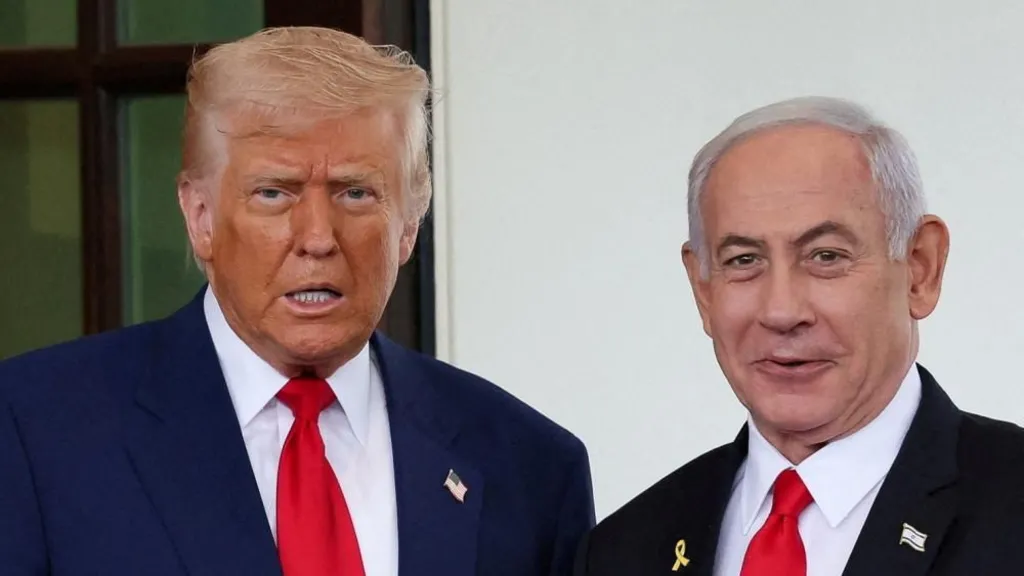
In a significant move towards peace, Israeli Prime Minister Benjamin Netanyahu arrived in Washington to meet US President Donald Trump, with both leaders set to discuss the prospects of a much-anticipated Gaza ceasefire. After 21 months of unrelenting conflict, this meeting comes as hopes for a breakthrough in the Gaza ceasefire discussions reach new heights.
President Trump has been vocal about his stance, having previously stated that he has been “very firm” with Netanyahu on the need to end the hostilities. “We are working to achieve the deal that has been discussed, under the conditions we have agreed,” Netanyahu remarked before his departure, expressing his belief that his conversation with Trump would help “advance this outcome, which we all hope for.”
Meanwhile, indirect talks between Israel and Hamas regarding a proposed 60-day ceasefire and hostage release deal, which has been largely brokered by the US, resumed in Qatar on Sunday evening. Despite the renewed talks, significant differences still remain, leaving many uncertain about whether an agreement is truly within reach.
Palestinian Optimism, Cautious and Wary
On the ground in Gaza, the situation remains dire, with Palestinians expressing both cautious optimism and deep-rooted fears of further instability. Nabil Abu Dayah, a Palestinian man who fled the violence in Beit Lahia to Gaza City with his family, shared his apprehension: “I don’t wish for a truce but a complete stop to all war. Frankly, I’m afraid that after 60 days the war would restart again. We got so tired of displacement, we got tired of thirst and hunger, from living in tents.”
As large rallies took place in Israel calling for the release of hostages, with some 50 people believed to still be held by Hamas, many questioned why the proposed framework would not include the immediate release of all captives. “This is the time to save lives. This is the time to rescue the bodies from the threat of disappearance,” said Ilay David, whose brother, a musician, was filmed by Hamas during a previous hostage release.
A Shifting Landscape and Regional Tensions
Netanyahu’s visit to the White House marks the third such trip since Trump’s return to power nearly six months ago. It is the first time the two leaders meet since the US joined Israeli strikes on Iranian nuclear sites and later brokered a ceasefire between Israel and Iran. There is growing speculation that the new developments, particularly the recent 12-day war, may create favorable conditions for a ceasefire in Gaza.
Netanyahu, buoyed by renewed public support in Israel after the Iran offensive, now finds himself in a stronger position to navigate internal pressure, including opposition from his far-right coalition partners who continue to push for Israel to retain control over Gaza.
Hamas, weakened by Israeli strikes on Iran—a major regional ally—may now be in a position to make concessions that were previously unattainable.
Ceasefire Framework: What We Know So Far
The latest ceasefire proposal aims to secure the release of 28 hostages—10 alive and 18 dead—over a 60-day period, with humanitarian aid to Gaza increasing significantly during the course of the truce. However, Hamas has expressed reservations about certain conditions, including the timeline for Israeli troop withdrawals and the operation of the Rafah crossing between Gaza and Egypt. A large number of Palestinian detainees are also expected to be released by Israel in exchange for the hostages.
Despite the framework’s gradual approach, Netanyahu’s office made it clear that any changes demanded by Hamas were “not acceptable.” Netanyahu has maintained his firm stance that Hamas must be disarmed, a demand Hamas has so far refused to entertain.
The Humanitarian Crisis in Gaza Continues
As diplomatic efforts continue in Washington, the humanitarian situation in Gaza has reached critical levels. With no fuel entering Gaza in over four months, essential medical supplies, water, and telecommunications are running out. The United Nations has warned that without a swift influx of aid, the lives of many more civilians are at risk.
Israeli military operations, which began in retaliation for Hamas-led attacks on October 7, 2023, have claimed the lives of over 57,000 Palestinians, according to the Hamas-run health ministry. The tragic human cost of this ongoing conflict has sparked renewed calls for an end to the violence.
Conclusion: A Critical Juncture for Peace
The coming days will be crucial, both politically and humanitarian-wise. As President Trump seeks to move forward with other Middle Eastern priorities, such as border talks with Syria and the normalization of relations between Israel and Saudi Arabia, the stakes for a lasting Gaza ceasefire remain high. The global community continues to watch closely as Netanyahu and Trump work to navigate the complexities of the region’s most persistent conflict.
