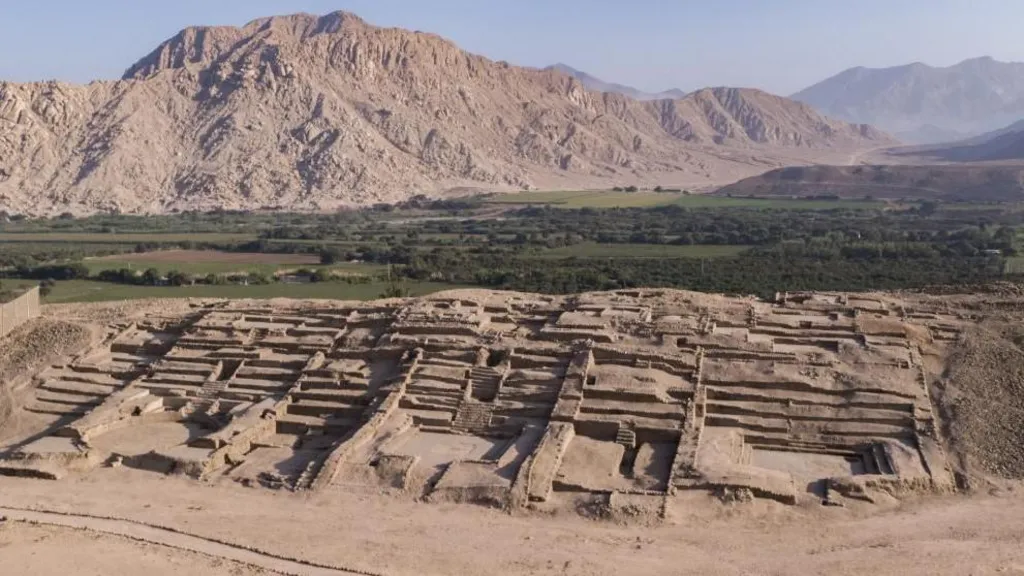
Archaeologists in Peru have uncovered a remarkable ancient city, shedding new light on the Americas’ oldest civilisation. The 3,500-year-old city, named Peñico, was discovered in the northern Barranca province, roughly 200 km north of Lima. Its historical significance lies in its role as a strategic trade hub connecting coastal communities with those in the Andes mountains and the Amazon basin.
Located 600 meters above sea level, the city is believed to have been founded between 1,800 and 1,500 BC, aligning with the rise of early civilisations in other parts of the world, including the Middle East and Asia. The discovery provides crucial insight into the aftermath of the Caral civilisation, which was once the most advanced society in the Americas around 3,000 BC.
The Peñico site, explored for the last eight years, reveals a treasure trove of artefacts. Researchers have unearthed 18 structures, including ceremonial temples, residential buildings, and circular terraces. Drone footage of the area showcases stone and mud buildings that once formed the heart of this bustling urban centre. Among the most significant finds are clay sculptures, ceremonial objects, and necklaces made from beads and seashells, providing further evidence of the sophisticated culture that once thrived there.
Dr. Ruth Shady, the archaeologist responsible for the Caral excavation in the 1990s, emphasised the discovery’s importance in understanding the continuity of the Caral civilisation. She explained that Peñico was strategically located to facilitate trade between diverse societies across the coast, highlands, and jungle regions.
Marco Machacuay, an archaeologist from Peru’s Ministry of Culture, stressed the importance of Peñico as an extension of Caral. The site’s artefacts and architectural layout suggest the city played a pivotal role in maintaining the cultural and economic ties of the Caral civilisation.
Peru, home to some of the world’s most famous archaeological wonders—including the Inca citadel of Machu Picchu and the Nazca Lines—has once again proven to be a rich source of historical discoveries, offering a deeper understanding of the ancient world.
