By Usman Ishaq Shehu
PhD Candidate | Editor in Chief, J.O.Comms | Public Affairs Analyst & Strategic Communicator
usmanshehu66@yahoo.com
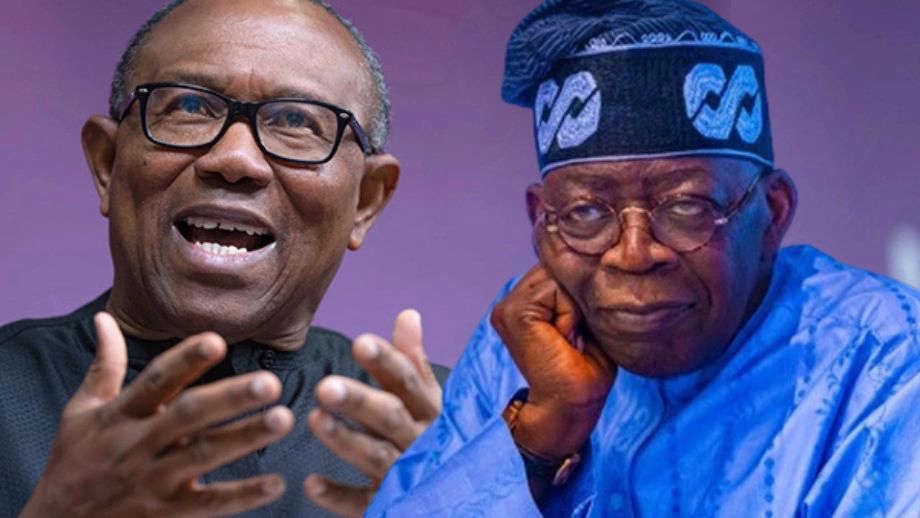
After watching Peter Obi’s recent interview on Channels Television’s “Sunday Politics,” one major reality was reinforced: President Bola Ahmed Tinubu still holds the strategic, structural, and electoral advantage going into the 2027 general elections.
Peter Obi, the Labour Party’s 2023 presidential candidate, publicly confirmed that he will contest again in 2027. He made it clear that he has no intention of serving as a running mate to former Vice President Atiku Abubakar or any other candidate. In his words, “Nobody has ever discussed with me whether I am going to be A or B or C. I’m going to contest for the President of the Federal Republic of Nigeria, and I believe I am qualified for it.” While this reaffirms Obi’s ambition, it also highlights a critical and unresolved issue: the lack of unity within the opposition ranks.
The Labour Party and the Peoples Democratic Party (PDP), two of the major opposition forces in the 2023 elections, are showing no signs of merging or forming a strategic alliance. Instead, the political egos of their leaders continue to widen the gulf between them. Obi’s refusal to entertain the idea of a joint ticket with Atiku signals a deeper ideological and structural fracture that could again prove fatal for the opposition. The Third Force argument, once touted as a credible alternative, is losing momentum amid fragmentation, internal bickering, and lack of a consistent nationwide grassroots structure.
In contrast, President Bola Tinubu is consolidating power both at home and abroad. His leadership since assuming office has been marked by bold economic reforms such as the removal of fuel subsidies, unification of exchange rates, overhaul of the tax and fiscal framework, and digital economy expansion, all tailored toward stabilising Nigeria’s long-term economic outlook. Despite initial public resistance to some of these policies, Tinubu’s administration has maintained focus, demonstrating the political will to make tough but necessary decisions. His strong relationship with state governors, his national assembly support base, and his grasp of party structure across all six geopolitical zones remain unmatched.
Tinubu is not just preparing for an election, he is actively delivering governance. In the international arena, he has redefined Nigeria’s foreign relations through strategic engagements at ECOWAS, the G20, BRICS, and with global investment partners. These moves are repositioning Nigeria as a serious actor on the global economic and diplomatic stage. No other 2027 contender comes close to this level of national and international credibility.
Moreover, President Tinubu’s political capital remains robust. He controls the most formidable political machinery in Nigeria, an alliance that cuts across North and South, rural and urban constituencies, traditional and emerging blocs. The APC remains a cohesive, largely united party with incumbency advantage, while the PDP and LP are embroiled in endless crises, leadership struggles, and legal disputes over party control and primary processes.
The 2023 elections showed that a divided opposition cannot defeat a cohesive and determined ruling party. Obi’s declaration to run again independently confirms that the fragmentation will likely continue. Atiku’s possible return to the race only complicates the picture further. Instead of a united front, what the opposition is presenting to Nigerians is a competition of egos, not a coalition of purpose.
President Tinubu’s focus on youth empowerment, digital education, startup incubation, agriculture, renewable energy, and infrastructure transformation speaks directly to the long-term aspirations of a modern Nigerian state. His policies are forward-looking, even when politically inconvenient, and this separates him from the short-term populism of many of his challengers.
In the final analysis, the road to 2027 is gradually taking shape, and the political atmosphere is already simmering. However, with a divided opposition, a proven leadership record, control of political structures nationwide, and a bold reformist agenda in motion, President Bola Ahmed Tinubu remains the most formidable contender by every objective measure.
The opposition is chasing power. Tinubu is building a legacy. And come 2027, Nigerians may again choose continuity over confusion.
