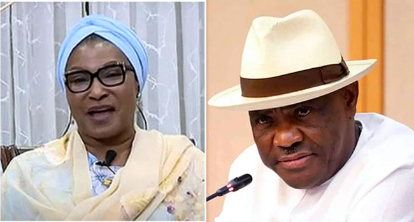
Senator Ireti Kingibe, who represents the Federal Capital Territory (FCT), has criticised the FCT Minister, Nyesom Wike, accusing him of governing Abuja with an “emperor mentality” and ignoring the needs of residents.
Speaking during an appearance on Channels Television’s Political Paradigm on Tuesday, Kingibe said Wike has failed to improve the lives of Abuja citizens, citing unpaid salaries, insecurity, poor infrastructure, and a lack of transparency in budget processes.
“I decided that in spite of the things that I don’t like that he is doing, I will minimise my public criticisms of him,” she said. “But it’s not made any difference because he has an emperor mentality.”
The senator said she has been sidelined in decision-making processes, including the FCT budget, and claimed that attempts to foster cooperation were rebuffed by Wike — including an incident where he reportedly cut off a call from her. She later escalated the matter to Senate President Godswill Akpabio.
Kingibe, of the Labour Party (LP), and Wike, a PDP member currently serving under the APC-led government, have been at odds since their respective appointments in 2023. Their political clash reflects deeper tensions between party lines and governance approaches in the capital.
On the state of the FCT, Kingibe lamented the rise in insecurity, including one-chance robberies and kidnappings, as well as the deterioration of basic infrastructure such as street lighting. She also criticised the minister’s fiscal priorities, saying key areas like healthcare, education, and agriculture were underfunded.
“There should be more money in healthcare, education, and agriculture,” she said, “but the minister has refused to dedicate sufficient funds to these crucial areas.”
Kingibe argued that former FCT Minister Nasir El-Rufai achieved more tangible results in infrastructure during his tenure, despite the fanfare surrounding Wike’s ongoing projects.
The senator’s remarks add to growing criticism of the FCT administration, as debates over transparency, security, and resource allocation continue to dominate public discourse in Nigeria’s capital.