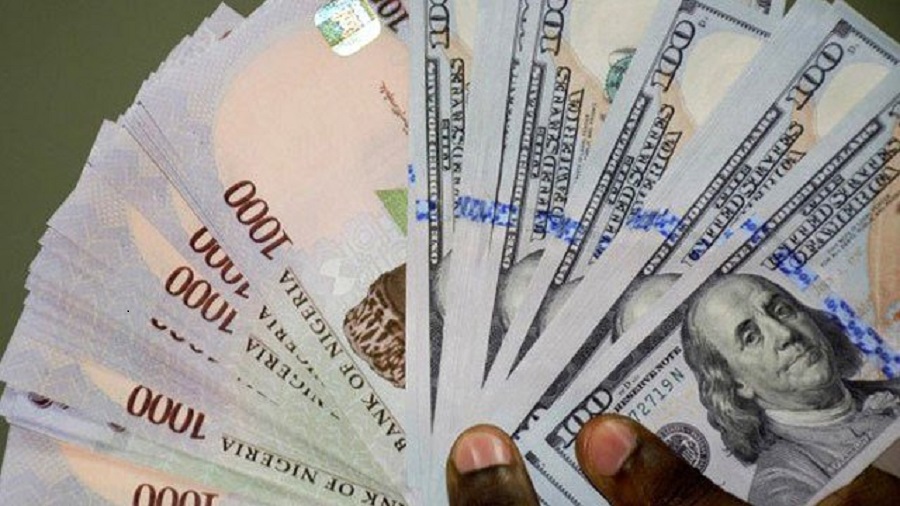
The naira closed slightly weaker at ₦1,529.22 per US dollar at the official Nigerian Foreign Exchange Market on Tuesday, compared to ₦1,528.33/$ recorded on Monday, according to data published on the Central Bank of Nigeria (CBN) website. This marginal decline comes amid renewed demand for foreign exchange following the resumption of international spending limits on naira-denominated bank cards.
In recent days, several Nigerian banks — including United Bank for Africa (UBA), Wema Bank, GTBank, and FirstBank — reinstated international transactions on naira cards, with spending limits ranging from $500 per month to $1,000 per quarter. The development is seen as a move to ease international payment pressure on customers but is also expected to increase forex demand in an already tightly managed market.
Despite the movement at the official window, the parallel market remained stable, with investment firm CardinalStone reporting that the naira held steady at ₦1,540/$ on the street. In its 2025 mid-year outlook, CardinalStone projected the naira would remain range-bound in the second half of the year, trading between ₦1,550 and ₦1,635 per dollar.
The analysts attributed naira volatility in the first half of 2025 to global economic disruptions, citing $22.83 billion in foreign exchange outflows driven by investor flight to safe-haven assets like US Treasuries and gold. To stem the tide and support the naira, the CBN intervened by selling $4.72 billion into the market during the period.
However, CardinalStone dismissed fears that these interventions signaled a return to a fixed exchange rate regime. “The current FX framework allows for discretionary interventions in the presence of perceived market distortions,” the report stated. It emphasized that the recent market distortions were largely driven by external shocks rather than domestic policy missteps, noting that the CBN had made notable efforts to improve transparency in its foreign exchange operations.
