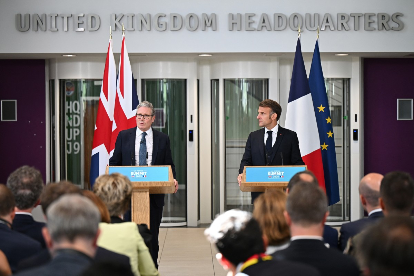
London and Paris have unveiled a new pilot scheme to return some migrants who cross the English Channel in small boats back to France, in a move hailed by Prime Minister Keir Starmer as “groundbreaking.” The initiative was announced on Thursday at the conclusion of French President Emmanuel Macron’s three-day state visit to the UK, marking a major shift in cross-Channel cooperation on migration. Speaking alongside Macron, Starmer said the plan aimed to “break the model” of irregular migration and would begin within weeks. Under the scheme, for each migrant returned, a different individual would be allowed into the UK legally.
While details remain sparse, reports indicate the programme may initially involve around 50 returns per week. President Macron, in comments likely to stoke political debate in Britain, blamed Brexit for exacerbating the Channel crisis, arguing that the UK’s withdrawal from the EU cut off access to legal migration routes and EU repatriation frameworks. “This is a pull factor,” Macron said. “Exactly the inverse effect of what Brexit promised.” Starmer, who is grappling with a surge in support for the anti-immigrant Reform UK party, is hoping the returns scheme will alleviate pressure on his Labour government.
Beyond migration, the two leaders used the state visit to deepen cooperation across defence, trade, and diplomacy. Key announcements included expanding the UK-France Combined Joint Expeditionary Force from 10,000 to 50,000 troops, boosting Storm Shadow missile production, and reaffirming support for Ukraine with a new coalition headquarters in Paris. Macron also urged a joint recognition of Palestinian statehood, calling it “the only hope for peace” in the Middle East. Both leaders pledged closer collaboration on global flashpoints and defence innovation.
Despite the state visit’s ceremonial highlights—horse-drawn processions, a Windsor Castle banquet, and the royal welcome from King Charles III—the migration issue dominated headlines. Critics, including Reform UK leader Nigel Farage, denounced the deal as “a humiliation for Brexit Britain.” The opposition Conservative Party echoed the sentiment, labelling the scheme a “weak and ineffective gimmick.” European reactions were mixed, with reports of concern among some EU nations about the broader implications of the migrant-exchange model.
