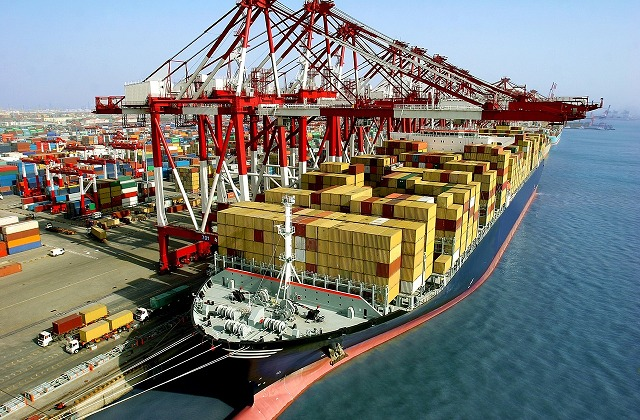
In the first half of 2025, the Lekki Deep Seaport successfully handled 287,000 twenty-foot equivalent units (TEUs) of containers, making significant progress towards its annual target of 500,000 containers, according to Mr. Daniel Odibe, the Deputy Chief Operating Officer of the port.
Speaking at a recent media event, Odibe detailed the port’s performance over the past few years, highlighting a marked improvement in its cargo handling capabilities. “In 2023, we handled just 58,000 TEUs. This number grew exponentially to 287,000 TEUs in 2024, and so far in 2025, we have already reached 287,000 containers, maintaining our trajectory towards this year’s target,” Odibe said.
The Lekki Deep Seaport is not only thriving in container handling, but also expanding its operations beyond Nigeria. The port has begun transshipment activities to neighbouring ports, including those in Togo and Ghana. “We are also targeting transshipment to Onne Port this year, with plans for more international transshipment operations across West Africa,” he added.
Odibe further revealed that the port has steadily increased its vessel traffic, now receiving between 10 and 12 vessels monthly. “As a result of our growing transshipment operations, the port is continuing to improve its standing in international trade,” he explained, adding that the recovery of the naira has contributed positively to these operations.
Wang Qiang, Managing Director and CEO of the Lekki Deep Seaport, emphasized the port’s commitment to upholding international standards. He said, “We continue to push the envelope, striving for excellence as West Africa’s deepest seaport. Our relentless pursuit of world-class standards is visible in our expanding role in maritime trade, leveraging technology and driving operational efficiency to bolster regional trade.”
The Lekki Deep Seaport’s success is not only a testament to its infrastructural capacity but also its strategic focus on regional integration and international competitiveness. With the port positioned as a key player in West Africa’s maritime sector, its impact on regional trade dynamics is expected to grow even further in the coming years.
