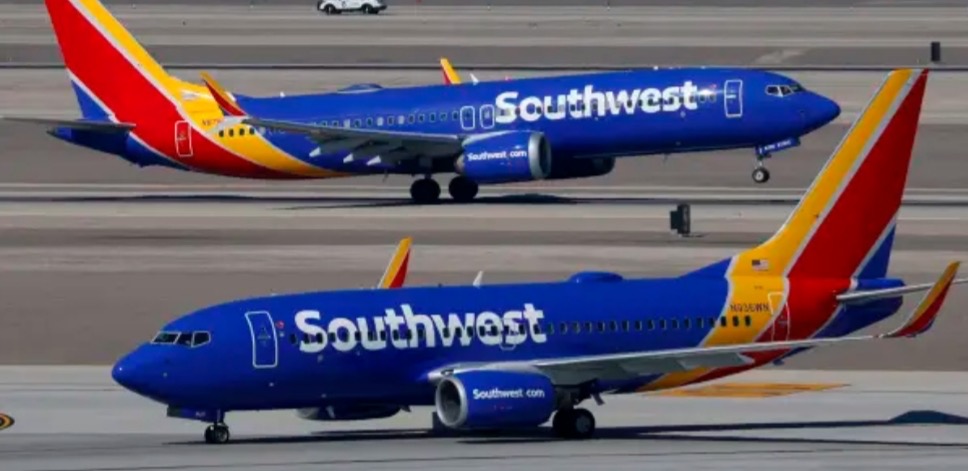
Southwest Airlines reported a significant drop in second-quarter profit as persistent weakness in domestic travel demand and continued fare discounting weighed on the airline’s bottom line. Despite the challenges, the carrier expressed cautious optimism, noting that travel demand has begun to stabilize.
Earnings Miss Expectations
For the quarter ending June 30, Southwest posted net income of $213 million, or $0.39 per share, down from $367 million ($0.58 per share) during the same period last year. On an adjusted basis, earnings came in at $0.43 per share, missing analysts’ expectations of approximately $0.51.
Revenue also declined, falling 1.5% year-over-year to $7.24 billion, as fare pressure and soft bookings particularly in leisure travel cut into performance. Revenue per available seat mile (RASM), a key industry metric, dropped around 3%, highlighting continued pricing challenges.
Demand Showing Signs of Recovery
Despite the downturn, Southwest executives noted that travel trends began to stabilize in the latter part of the quarter. The spring travel season was notably weaker than usual, prompting aggressive fare discounts across the industry. However, booking patterns in recent weeks suggest a return to more typical demand levels.
“We’re encouraged by signs of stabilization in domestic leisure travel demand,” the airline stated, while also warning that pricing pressures remain intense.
Lowered Full-Year Guidance
Citing continued demand uncertainty and a challenging fare environment, Southwest reiterated its recently slashed full-year EBIT (earnings before interest and taxes) forecast. The airline now expects EBIT between $600 million and $800 million, sharply down from its earlier projection of $1.7 billion.
Additionally, the airline withdrew full-year guidance for profit per share and revenue trends earlier this year amid volatile market conditions.
Strategic Shifts Underway
In response to the difficult operating environment, Southwest is implementing several strategic changes, including:
Introducing basic economy fares
Charging for checked bags a notable departure from its longstanding “bags fly free” policy
Reducing flight capacity
Launching aggressive cost-cutting measures
These changes are part of a broader initiative to improve margins and adapt to shifting traveler behavior and budget-conscious consumers.
Market Reaction
Shares of Southwest fell roughly 2% in after-hours trading following the earnings release. While the company’s performance lagged behind expectations, broader airline sector sentiment remains relatively positive, buoyed by strong results from Delta Air Lines and United Airlines earlier this earnings season.
Looking Ahead
For the third quarter, Southwest forecasts unit revenue growth between –2% and +2%, indicating ongoing uncertainty in fare strength. With summer travel in full swing, the airline’s performance in Q3 will serve as a crucial indicator of whether stabilization in demand can translate into stronger financial results.
