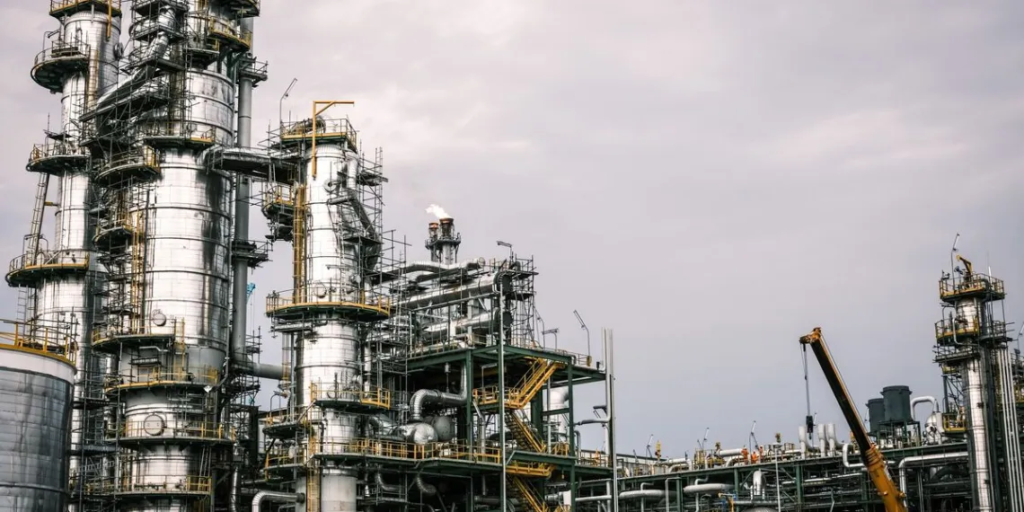
The House of Representatives Committee on Petroleum Resources (Downstream) has initiated a thorough investigation into Nigeria’s ailing downstream oil sector, focusing on several critical issues, including the controversial Turn Around Maintenance (TAM) of the country’s refineries, the acquisition of OVH Energy, and concerns over market dominance by the Dangote Refinery.
Ikenga Ugochinyere, the committee’s chairman, stated that the investigation’s primary goal is to uncover the reasons behind the persistent underperformance of the Port Harcourt and Warri refineries. Despite substantial investments and numerous assurances regarding their operational readiness, these refineries have continued to disappoint, raising questions among lawmakers.
“We intend to find out why the refineries are still not functioning as expected despite the huge investments. Public funds were allocated, yet the results are far from what Nigerians were promised,” Ugochinyere told reporters at a press briefing on Wednesday.
The committee’s investigation will also explore whether the failures of these refineries justify proposals to privatise or sell them, with Ugochinyere insisting that a thorough fact-finding process is essential before any such decision is made.
Ugochinyere highlighted another pressing issue—the significant challenges faced by local and modular refineries in securing domestic crude oil. He called it “unacceptable” that Nigerian refiners are forced to negotiate crude purchases in distant markets like Switzerland. He has urged for urgent measures to address these supply bottlenecks.
“There is a need for domestic refiners to have easier access to crude oil. It is an embarrassment that they must travel abroad to secure Nigerian crude,” Ugochinyere added.
The committee has received multiple petitions from stakeholders in the sector, including refinery operators, oil marketers, and retailers, concerning policy inconsistencies that threaten their investments. One of the most contentious topics is the potential market monopoly by the Dangote Refinery. As the refinery nears full-scale operations, stakeholders fear its dominance could exclude smaller players, destabilising the market and discouraging private investments.
“The committee has been made aware of the concerns from marketers and retailers about Dangote Refinery’s intentions to control the transportation and retailing of petroleum products. This could lead to market monopoly, and we must investigate further,” Ugochinyere asserted.
Further investigation will also focus on the acquisition of OVH Energy by the Nigerian National Petroleum Company (NNPC) Retail, a transaction that has sparked unresolved complaints from employees and stakeholders. Earlier investigations into this acquisition had been dismissed by the House, but Ugochinyere revealed that the committee would now reopen the matter to ensure thorough scrutiny.
“We cannot overlook the concerns raised by staff and stakeholders regarding the OVH acquisition. We must complete the investigation and provide answers,” Ugochinyere said.
The committee also plans to propose amendments to the Petroleum Industry Act (PIA) to address emerging gaps and strengthen the regulatory framework, especially regarding the role of the Nigerian Midstream and Downstream Petroleum Regulatory Authority (NMDPRA). Despite dismissing a petition calling for the dissolution of the NMDPRA board, Ugochinyere emphasised that the President holds the constitutional power for appointments, reaffirming that no one should be exempt from accountability.
The investigation will also examine the exclusion of artisanal refiners from the petroleum refining value chain. According to Ugochinyere, the experience of small-scale operators should not be overlooked in the ongoing reforms, as their contributions remain crucial.
A Pattern of Failed Reforms
This latest investigation follows a troubling pattern of failed reforms and mismanagement in Nigeria’s downstream oil sector. Successive administrations have allocated billions of naira for TAM projects, but the results have been dismal. In 2021, for instance, the Federal Executive Council (FEC) approved $1.5 billion for the rehabilitation of the Port Harcourt refinery, yet the facility still failed to meet expectations.
Similarly, the 2022 acquisition of OVH Energy by NNPC Retail sparked outrage among stakeholders, with accusations that the deal was conducted without proper due process, raising concerns over transparency and fair competition in the market.
As Dangote Refinery nears full capacity, fears of a market monopoly have resurfaced. Industry players warn that the refinery’s vertical integration could crowd out smaller operators, disturbing the balance of petroleum product pricing and distribution in the country.
This is not the first time the committee has investigated the oil sector. In 2024, it was involved in an ad hoc committee tasked with probing the importation of adulterated petroleum products and energy security challenges, though that investigation was dissolved amid controversy.
With this renewed probe, Nigerians may finally get the answers they have long awaited about the state of the country’s oil refineries and the true extent of the sector’s ongoing problems.
