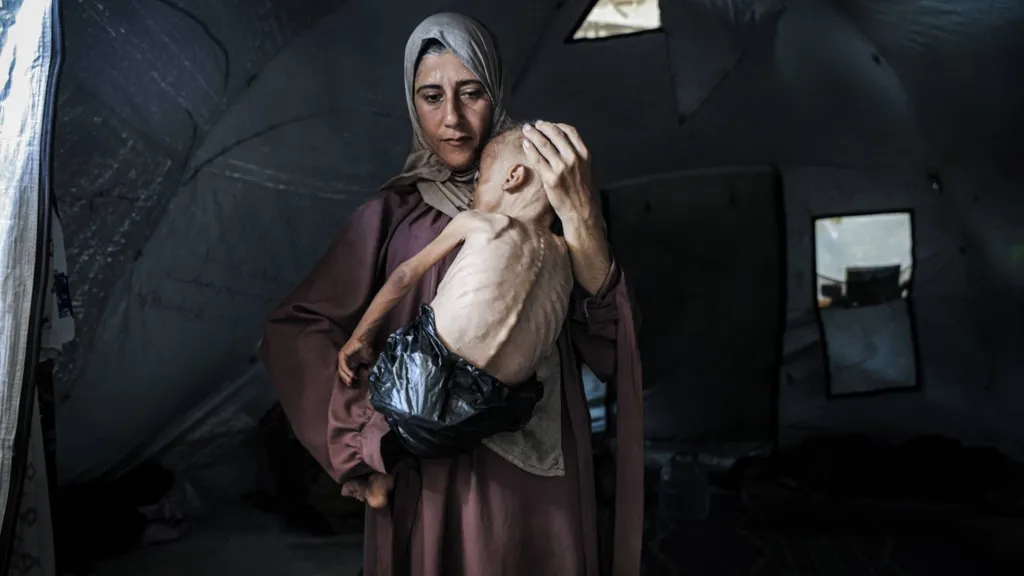
More than 100 international humanitarian and human rights organizations have sounded the alarm over what they are calling “mass starvation” in Gaza, urging global governments to take urgent action to address the ongoing crisis. Among the signatories of the joint statement are Médecins Sans Frontières (MSF), Save the Children, and Oxfam, all warning that their colleagues and the civilian population in Gaza are “wasting away” due to a critical lack of food, medicine, and basic resources.
The grim warning comes amid reports from Gaza’s Hamas-run health ministry that another 10 Palestinians have died in the past 24 hours from malnutrition, bringing the death toll to 43 since Sunday. Hospitals have been overwhelmed with cases of extreme exhaustion and dehydration, as survivors collapse in the streets due to hunger. The United Nations (UN) reported that nearly 100,000 women and children in Gaza are suffering from severe acute malnutrition and require immediate medical intervention.
“As the Israeli government’s siege starves the people of Gaza, aid workers are now joining the same food lines, risking being shot just to feed their families,” said the 109 humanitarian organizations in their statement, highlighting the devastating impact of the ongoing blockade on Gaza. The situation has reached a critical point, with food supplies completely depleted and hospitals unable to cope with the surge in patients suffering from acute malnutrition.
Dr. Ahmad al-Farra, head of paediatrics at Nasser hospital in Khan Younis, described the conditions as dire, stating, “No food has been available for three days, and we are seeing children come in at varying degrees of starvation. Some die in our care, while others are unable to absorb any nutrients due to other health issues.”
The United Nations and health experts have warned that Gaza is on the brink of famine, with nearly a quarter of the population facing starvation. The World Health Organization (WHO) has stated that approximately 100,000 women and children are in urgent need of life-saving assistance.
Meanwhile, prices of basic commodities have soared due to the blockade, leaving most families unable to afford even basic essentials. One resident shared, “It’s outrageous—prices are on fire. We need 300 shekels ($90) just to buy flour every day.”
The humanitarian crisis has worsened following Israel’s partial easing of the blockade, which was initially imposed in March in response to Hamas’s actions. Despite efforts to address the escalating shortages, the flow of aid into Gaza remains limited, with only a small number of lorries able to deliver supplies to the territory each day.
“Despite repeated assurances, civilians are being killed while attempting to collect aid,” said UN spokesperson Stéphane Dujarric. “This unacceptable pattern is the opposite of what facilitating humanitarian operations should look like.”
The Israeli government, which controls the entry of all supplies into Gaza, has rejected the claims made by humanitarian organizations, accusing them of “serving the propaganda of Hamas.” Israeli officials insist that their actions are in line with international law, and they have pointed to the logistical challenges as the main barrier to the effective delivery of aid.
However, the humanitarian organizations are calling for immediate and decisive international action to end the siege, open all land crossings, and ensure that humanitarian aid reaches the population without restrictions. They also emphasize the need for a UN-led response, with the urgent restoration of humanitarian access and the lifting of bureaucratic and administrative barriers.
As the death toll from malnutrition continues to rise, the international community faces increasing pressure to intervene in the rapidly deteriorating situation in Gaza.
