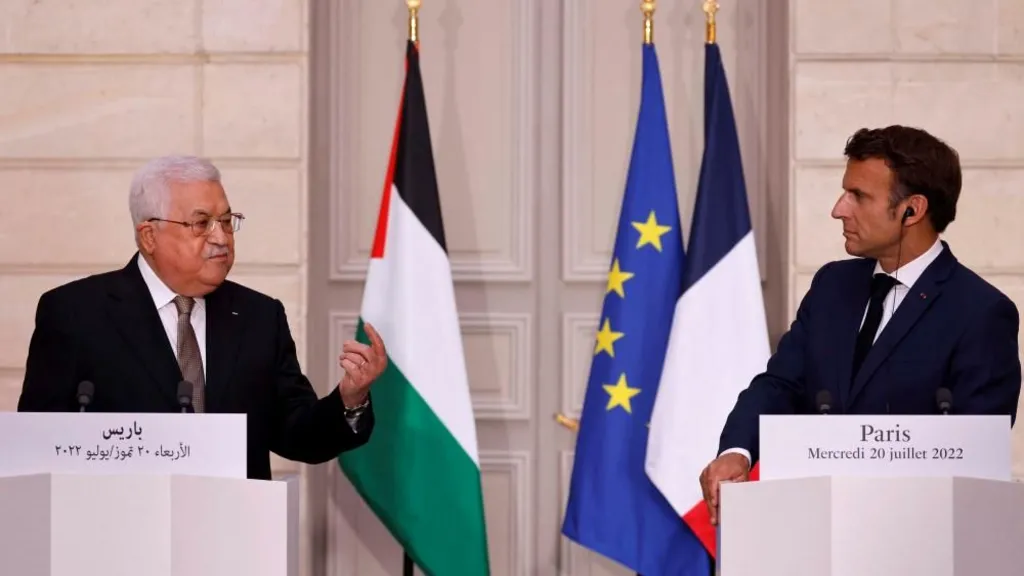
In a historic move, French President Emmanuel Macron declared that France will officially recognise the State of Palestine in September 2025. This announcement makes France the first G7 country to extend such recognition, marking a significant shift in international diplomacy regarding the Middle East.
In a post on social media platform X, Macron confirmed that the recognition would be formalised during the United Nations General Assembly in New York. He underscored the urgent need for peace in Gaza, calling for an immediate ceasefire and the release of all hostages taken during Hamas’s October 2023 attack in Israel. Macron also highlighted the importance of massive humanitarian aid for the people of Gaza, emphasising that “peace is possible” and that a sustainable solution requires collective international efforts.
Macron’s decision was met with praise and condemnation alike. Palestinian officials lauded the announcement, with Palestinian Authority President Mahmoud Abbas’s deputy, Hussein al-Sheikh, calling it a reaffirmation of France’s commitment to international law and Palestinian self-determination. “This position reflects France’s support for the Palestinian people’s rights to self-determination and the establishment of our independent state,” al-Sheikh said.
However, Israeli Prime Minister Benjamin Netanyahu strongly opposed the move, labelling it a reward for terrorism in the wake of the deadly Hamas attack. Netanyahu argued that recognising a Palestinian state under the current circumstances would create a “launch pad to annihilate Israel,” adding, “The Palestinians do not seek a state alongside Israel; they seek a state instead of Israel.”
The United States, a long-standing ally of Israel, also condemned the decision. US Secretary of State Marco Rubio referred to the move as “reckless,” expressing strong disapproval of France’s recognition of Palestinian statehood.
While France’s decision is groundbreaking, it is part of a growing global trend where more than 140 out of 193 UN member states already recognise Palestine as a sovereign state. Several European nations, including Spain and Ireland, have followed similar paths, but key international players such as the US, UK, and Canada have refrained from granting such recognition.
In the UK, political pressure is mounting on Prime Minister Sir Keir Starmer to follow France’s lead. In a statement, Starmer confirmed plans for an “emergency call” with French and German leaders, urging immediate actions to halt the violence in Gaza. While acknowledging the right of the Palestinian people to self-determination, he stressed that achieving a ceasefire would be a pivotal step toward the recognition of a Palestinian state and a viable two-state solution.
The diplomatic fallout from France’s recognition continues, with varying reactions across the Middle East. Saudi Arabia praised France’s decision, stating that it reaffirms the international consensus on Palestinian self-determination. Meanwhile, Hamas hailed Macron’s announcement, calling it a “positive step in the right direction” and urging other nations to follow suit.
The ongoing conflict between Israel and Hamas, which began in October 2023, has resulted in the deaths of thousands. The Israeli military has launched extensive operations in Gaza in retaliation for the Hamas attacks, which killed over 1,000 people and took more than 250 hostages. Since then, Gaza has been devastated, with reports indicating that over 59,000 Palestinians have died in the ongoing conflict, most of them in Gaza.
The United Nations has raised alarms over the dire humanitarian situation in Gaza, with the Palestinian refugee agency UNRWA reporting that one in five children in Gaza City is malnourished. Furthermore, more than 100 international aid organizations have warned of mass starvation unless urgent intervention takes place. The situation remains critical, with Israel controlling the flow of supplies into Gaza and citing Hamas as the cause of the growing crisis.
As the world watches, the recognition of a Palestinian state by France may not only reshape the dynamics of the Middle East but also influence the international community’s approach to the Israeli-Palestinian conflict.