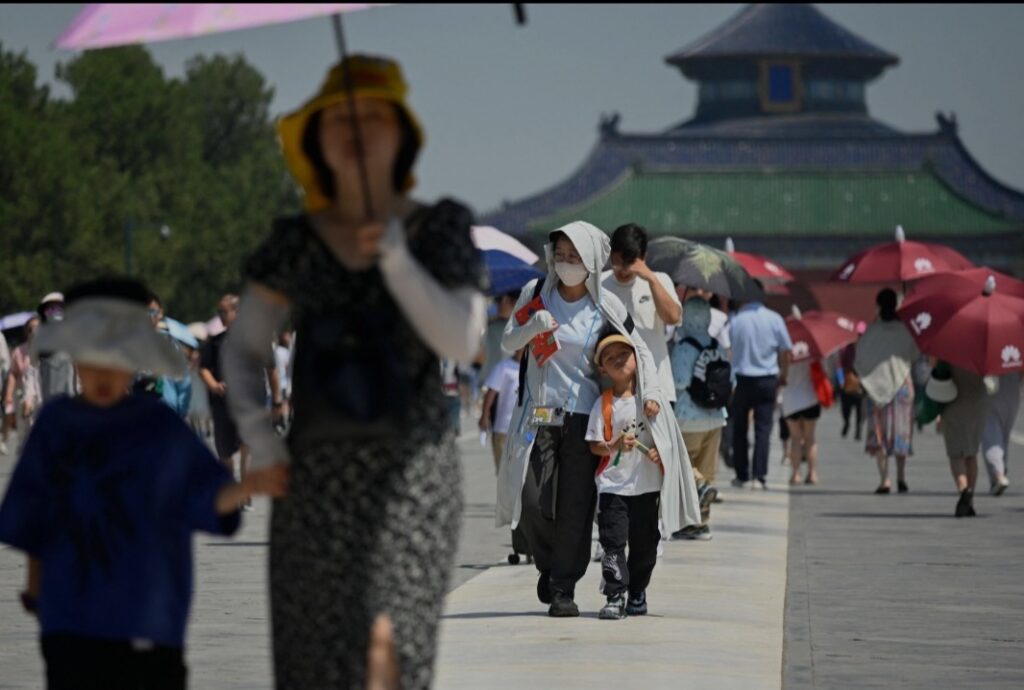
China is grappling with an unprecedented heatwave, with the country recording its highest-ever number of hot days defined as temperatures of 35 °C (95 °F) or higher since mid-March, according to the National Climate Center.
The intense and prolonged heat has affected vast swaths of the country, from the industrial heartlands in the east to the desert regions in the northwest. In total, over 152 national weather stations reported temperatures exceeding 40 °C in recent weeks. One observatory in Xinjiang registered a searing 48.7 °C (119.7 °F) among the highest temperatures ever recorded in China.
Power Grid Under Pressure
As the mercury climbs, so too does energy demand. Electricity consumption hit a record 1.5 billion kilowatts last week, straining the national grid and prompting officials to warn of potential blackouts. The heat has also impaired the efficiency of hydropower and solar power generation, further challenging the country’s energy infrastructure.
This is the third time this summer the grid has been pushed to its limit, as households and industries ramp up air conditioning and cooling efforts to cope with the scorching conditions.
First Nationwide Health Alert Issued
In a rare move, Chinese authorities issued the nation’s first national high-temperature health risk warning, urging citizens particularly the elderly, children, and outdoor laborers to stay indoors and avoid prolonged exposure to the sun.
Hospitals in several cities have reported a surge in heat-related illnesses. In Shandong province, one university student suffered a heatstroke, and a dormitory supervisor tragically passed away amid the high temperatures. Universities have taken emergency measures, such as allowing students to sleep in air-conditioned libraries and fast-tracking upgrades to dormitory cooling systems.
Climate Concerns Mount
Experts warn that this extreme weather event is part of a broader pattern of climate change, which is increasing the frequency, intensity, and duration of heatwaves across the globe. The current situation in China mirrors record-breaking temperatures seen in parts of Europe and North America this summer.
“This isn’t just a fluke,” said a senior climatologist at the Chinese Academy of Sciences. “It’s a sign of the new normal unless we take urgent action to mitigate greenhouse gas emissions and adapt our infrastructure.”
Looking Ahead
With forecasts showing little relief in the immediate future, authorities are ramping up emergency preparedness across sectors. Cooling shelters have been established in major cities, and power companies are under government directive to ensure supply stability.
The Chinese government has yet to announce long-term policy shifts in response to the heatwave, but pressure is mounting for comprehensive climate adaptation strategies as such events become more frequent.
