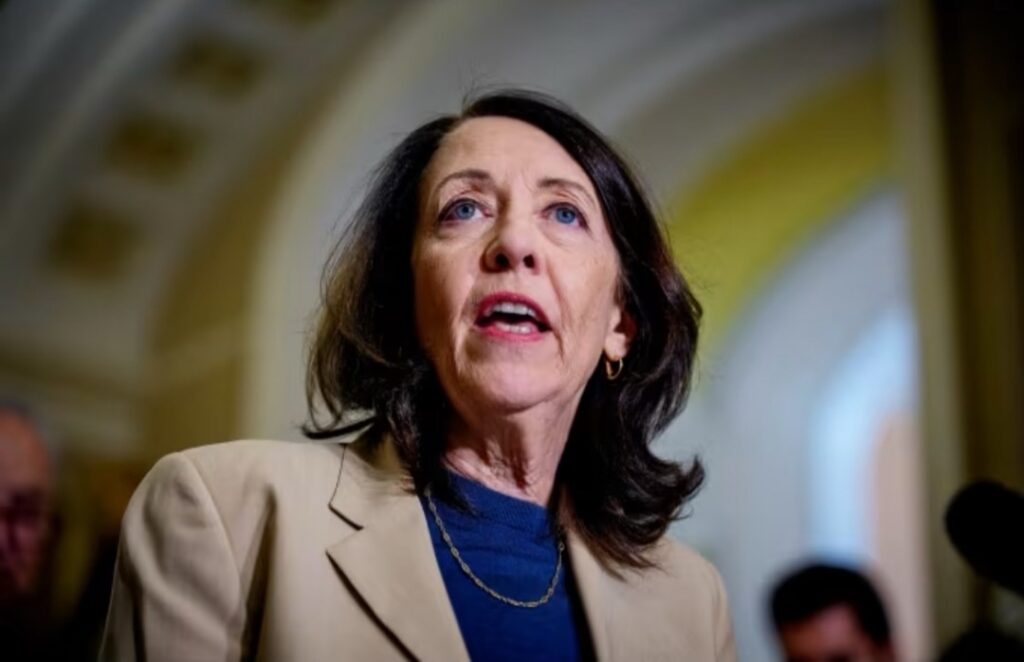
In the wake of deadly flash floods that claimed more than 130 lives over the July 4th weekend in Texas, Senator Maria Cantwell (D, Wash.), the top Democrat on the Senate Commerce, Science, and Transportation Committee, has issued a bipartisan appeal to former President Donald Trump: prioritize critical investments in America’s weather forecasting and early warning infrastructure.
In a formal letter addressed to Trump, Cantwell outlined a five-point plan to modernize and strengthen the country’s weather prediction systems, efforts she describes as a “once in a generation opportunity to save lives, reduce economic loss, and enhance national resilience.”
“These tragedies are becoming more frequent and more extreme,” Cantwell wrote. “Americans deserve better tools to protect themselves from disasters we increasingly know are coming.”
A Bipartisan, Solutions First Proposal
Cantwell’s proposal stops short of political critique, instead offering pragmatic, bipartisan solutions aimed at improving America’s preparedness for extreme weather events. The five-point plan includes:
- Upgrading Doppler radar technology with phased array systems to enable faster and more precise storm tracking.
- Replacing aging satellites with next generation sensors capable of detecting environmental hazards like lightning, wildfires, and floods.
- Enhancing ocean observation systems, including critical buoy networks used for hurricane and tsunami forecasting.
- Investing in supercomputing and data assimilation, to close the forecasting accuracy gap with European weather models.
- Modernizing NOAA’s research and alert systems, particularly through stronger support for the Office of Oceanic and Atmospheric Research.
Urgency Amid Budget Cuts
The senator’s appeal comes in direct response to the Trump campaign’s proposal to slash the National Oceanic and Atmospheric Administration (NOAA)’s budget by 27%. These cuts would impact both research and operational forecasting services, including the National Weather Service.
“Cutting back on the very systems that give people time to get to safety is not fiscally conservative. It’s dangerous,” Cantwell warned in her letter. “This isn’t about red or blue states. It’s about red alerts and getting people out of harm’s way.”
A Call for Unity in the Face of Climate Extremes
While climate change remains a polarizing issue, Cantwell’s focus remains squarely on preparedness, safety, and cost efficiency. A 2024 National Academy of Sciences report found that every $1 invested in early warning systems can save up to $6 in disaster recovery costs.
Cantwell emphasized that her recommendations are not ideological but based on decades of scientific research and input from meteorologists, emergency responders, and local governments across the political spectrum.
The Road Ahead
Though President Trump has not yet formally responded, the letter has drawn interest from both Republican and Democratic lawmakers who have increasingly faced pressure from constituents affected by extreme weather.
With natural disasters growing in frequency and severity, Cantwell’s call to action underscores a broader debate over America’s readiness and whether its weather systems are equipped for a climate challenged future.