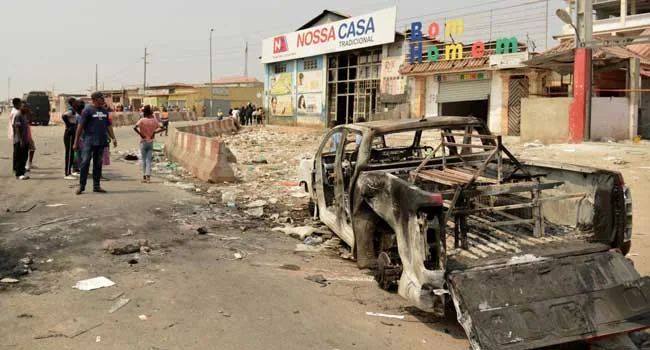
Angola has been rocked by deadly unrest following protests against a controversial fuel price hike, resulting in at least 22 deaths since Monday, according to the country’s Interior Minister, Manuel Homem. As calm gradually returned to the capital, Luanda, sporadic gunfire continued to echo across the city, alongside violent clashes between demonstrators and the police.
The protests were sparked by a recent hike in fuel prices, which saw the cost of fuel increase from 300 kwanzas ($0.33) to 400 kwanzas ($0.43) per litre on July 1. This price surge, which has hit millions of Angolans already struggling with high living costs, was met with fury across the nation, particularly in urban areas.
Speaking at a press conference on Wednesday, Minister Homem confirmed the death toll, which included one police officer. Nearly 200 others were reported injured, with more than 1,200 individuals arrested during the violent protests that unfolded on Monday and Tuesday.
“We regret 22 deaths, including one police officer,” Homem said, addressing the media on Wednesday.
Looting was widespread as anger over the price hike boiled over, and several businesses remained shuttered in Luanda as security forces patrolled the streets. The once-bustling city became eerily quiet on Wednesday, with only a few people venturing out to queue at petrol stations or shops. The streets, largely deserted, reflected a tense calm as residents stayed home, avoiding potential confrontation with the police.
Elsewhere in the country, unrest continued as clashes were reported in the southern city of Lubango, where police fatally shot a 16-year-old protester. The teenager had allegedly been part of a group attempting to storm the headquarters of the ruling MPLA party. This incident has further heightened tensions as Angolans grapple with the consequences of the fuel price increase.
This surge in unrest comes on the back of widespread frustration over the rising costs of living in Angola, one of Africa’s leading oil producers. The country has faced numerous challenges in recent years, and with a population already grappling with poverty and unemployment, the fuel price hike has exacerbated socio-economic tensions.
The Aftermath: A Nation Grapples with Economic Strain
The violence witnessed in Angola underscores the growing dissatisfaction with the government’s handling of economic challenges, especially amid the backdrop of volatile oil prices. For many, the price hike is seen as a symptom of the country’s broader economic struggles, further widening the gap between the wealthy and the impoverished.
While calm has returned to the capital, the damage done by the unrest is palpable. The loss of life, property, and the strained relationship between the government and the public have left a lingering sense of disillusionment. With the country’s economy already under strain, it remains to be seen how the government will address these grievances moving forward.
