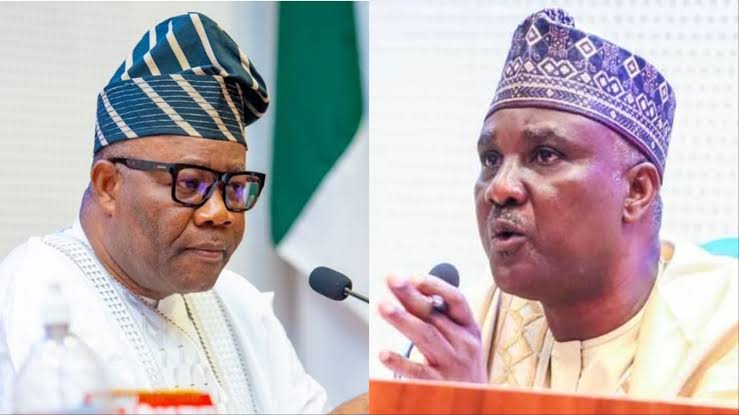
The Socio-Economic Rights and Accountability Project (SERAP) has taken legal action against the leadership of Nigeria’s National Assembly, accusing them of improperly managing and failing to account for lawmakers’ running costs. The lawsuit, filed at the Federal High Court in Abuja, names Senate President Godswill Akpabio and House of Representatives Speaker Tajudeen Abbas as defendants.
In a statement issued on Friday, SERAP’s Deputy Director, Kolawole Oluwadare, detailed the suit’s basis, citing a recent claim by former President Olusegun Obasanjo. Obasanjo alleged that the National Assembly has been setting its own salaries and allowances, contrary to the guidelines established by the Revenue Mobilisation Fiscal Allocation Commission (RMAFC).
SERAP is seeking several court orders, including:
1. An Order of Mandamus: to compel Akpabio and Abbas to cease the practice of setting their own remuneration and allowances, which are categorized as “running costs.”
2. An Order of Mandamus: to mandate the disclosure of the exact monthly running costs received by lawmakers and detailed spending reports related to these costs.
3. An Order of Mandamus: to end the alleged practice of paying running costs directly into the personal accounts of lawmakers.
Oluwadare emphasized that such practices violate both the Nigerian Constitution and Federal Government Financial Regulations. “The provisions of paragraph N, section 32(d) of the Third Schedule to the Nigerian Constitution 1999 [as amended] clearly make it unlawful for the National Assembly to fix its salaries, allowances, and running costs,” he said. He further condemned the practice of channeling public funds into personal accounts, as it contravenes Rule 713 of the Federal Government Financial Regulations, which prohibits the payment of public money into private accounts.
The lawsuit highlights growing concerns over transparency and accountability in the management of public funds by Nigeria’s legislative body. The court’s response to SERAP’s request will be closely watched for its implications on the oversight and governance of legislative finances in the country.
