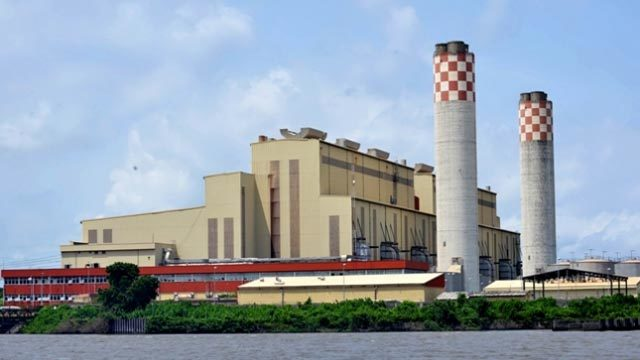
A significant controversy has emerged over the ownership of Ikeja Electricity Distribution Company (Ikeja DisCo) and the Egbin Power Plant after an advertorial suggested that FBN Quest Trustees Ltd. had been appointed as a receiver to take over the assets of Sahara Energy. The advert claimed that the company was unable to repay its debts, prompting the court’s intervention.
However, Sahara Energy swiftly refuted these claims, stating that the matter is still under legal review and no court verdict has been rendered. In a public statement, the company condemned the advert as a gross misrepresentation of facts.
According to Sahara Energy’s Chief Legal and Regulatory Officer, Babatunde Osadare, the claim that the power entities were under receivership is false. He emphasized that in a ruling made on August 5, 2025, the Federal High Court in Lagos had explicitly prohibited any receivership actions related to the disputed debt. The court restricted the purported receiver from interfering with the assets, businesses, or operations of Ikeja DisCo and Egbin Power.
This controversy is the latest in a string of financial challenges faced by Nigeria’s power sector, with issues such as unpaid government subsidies and the increasing financial strain on power distribution companies (DisCos) and generation companies (GenCos). The GenCos had earlier raised alarms about the government’s N4 trillion debt, which threatens to disrupt operations across the power sector.
The Advert and Sahara Energy’s Response
The advert in question, which was published in several media outlets, claimed that FBN Quest Trustees Ltd. had taken control of Sahara Energy’s 70% stake in Egbin Power Plc and KEPCO Energy Resources Nigeria Ltd. due to a debt-related default. The announcement urged debtors to preserve assets for the ongoing receivership process and instructed creditors to submit claims within 14 days.
In its response, Sahara Energy categorically denied the advert’s claims. The company assured stakeholders that the power plants, including Egbin Power Plc and First Independent Power Limited, were not in receivership. Sahara Energy also emphasized that the ongoing legal case regarding the debt had not been decided by the courts.
“The claims are not only false but represent a malicious attempt to subvert the course of justice,” Osadare stated. He further clarified that the recent court ruling from Justice Akintayo Aluko of the Federal High Court had placed an injunction on any actions that would interfere with the assets or business operations of the power entities.
Power Sector’s Struggles: A Wider Crisis
While the controversy over Ikeja DisCo and Egbin Power Plant has taken centre stage, it highlights broader, long-standing issues within Nigeria’s power sector. Dr. Muda Yusuf, CEO of the Centre for the Promotion of Private Enterprise (CPPE), remarked that the country’s electricity sector is plagued by deep-rooted challenges. These include flawed privatisation processes, aging infrastructure, and a government-subsidised pricing model that is unsustainable.
The power sector’s liquidity crisis, driven by these challenges, has been compounded by ongoing disagreements between private investors and the government over tariffs and subsidies. Investors in the sector, including both DisCos and GenCos, have voiced concerns about the affordability of electricity and the political resistance to cost-reflective tariffs.
Yusuf also pointed to the high interest rates in Nigeria, which he said have made it particularly difficult for many DisCos to service their debt. The sector’s deepening financial woes, he added, require urgent and strategic reforms to prevent a full collapse.
The Way Forward
As the dispute over the receivership of Ikeja DisCo and Egbin Power Plant continues to unfold, the Nigerian government and stakeholders in the power sector will need to address the underlying financial and operational issues that are holding back the sector’s growth. A comprehensive strategy for resolving the power sector’s challenges must be devised, with a focus on transparent legal processes, sustainable tariff structures, and the resolution of long-standing debts.
