Importing goods into Nigeria is about to become significantly more expensive as the Nigeria Customs Service (NCS) reinstates the four percent Free on Board (FOB) charge and prepares to increase licensing fees for clearing agents.
The revived tariff, passed into law, is calculated on the value of imported goods, including transportation costs up to the port of loading. It replaces the previous one percent Comprehensive Import Supervision Scheme (CISS) and the seven percent port surcharge on Customs duties.
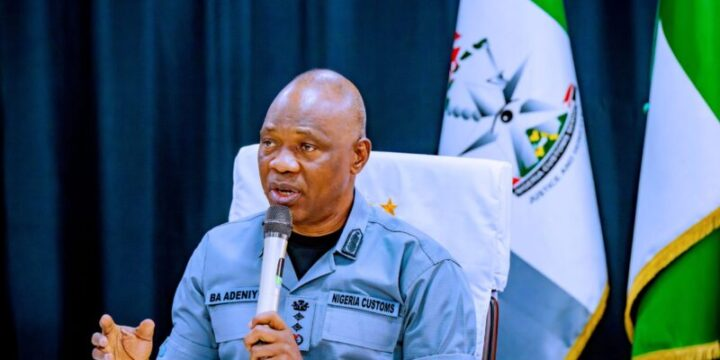
According to Bashir Adeniyi, Comptroller-General of Customs, the measure is intended to “serve investments in technology,” but industry experts warn that the cost will be felt directly by consumers.
“Nigerians should brace themselves as they will pay more,” said Sulaiman Ayokunle, a Customs agent and senior special adviser on Media to the Association of Nigerian Licensed Customs Agents (ANLCA) president. “The implication is that whatever they were paying before, there is now a four percent addition on it.”
Impact on Import Costs
A sample import declaration for a vehicle with an FOB value of ₦4 million showed the new Foreign Common Surcharge (FCS) tax code representing the four percent charge. The importer paid total taxes of ₦2.13 million, which included:
- 20% Customs duty
- 15% Nigerian Automotive Levy (for vehicles or related parts)
- 7% port surcharge
- 7.5% Value Added Tax (VAT)
An internal Customs breakdown — referred to by agents as “Customs Mathematics” — shows how the four percent FCS inflates final costs. For used vehicles, the total duty is calculated by multiplying the base duty by 2.573, factoring in the FCS, existing tariffs, levies, and VAT. The pattern applies to trucks, spare parts, and household goods, meaning higher prices across the board.
Ayokunle stressed that many Nigerians are already struggling with reduced spending power amid double-digit inflation, warning:
“Every Nigerian will bear the cost.”
Customs’ Justification
The NCS insists the charge is necessary to fund its ongoing modernisation projects, including the B’odogwu platform for cargo clearance.
“We really don’t have a choice… If you want to eat and lick better soup, we must be ready to fund it. Technology is not cheap,” Adeniyi told stakeholders.
As Nigeria now chairs the World Customs Organisation (WCO) Council, Adeniyi says the country must demonstrate it can operate a modern trade facilitation system built and managed locally.
Clearing Agents Face 1,500% License Fee Increase
The FOB charge is not the only cost adjustment on the horizon. From January 2026, clearing agents and freight forwarders will face a 1,500% hike in license renewal fees.
Currently, agents pay ₦215,000 plus ₦15,000 per NCS command annually. Under the new rates, renewal will cost ₦4 million, while new licenses will jump from ₦600,000 to ₦10 million.
Customs says the review aligns with Sections 103 and 107 of the Nigerian Customs Service Act 2023, reflecting “prevailing economic realities, including the value of exchange rates, and addressing operational demands.”
But industry operators say this will raise the cost of doing business and push prices even higher for end consumers.
“Once it affects renewal, it will affect importers. They pay more and transfer it to the final consumers,” one clearing agent told BusinessDay. “It’s a shame… If the economy is bad, we feel it more than Customs.”
‘Premium Perks’ for Compliance
Customs says agents who comply with the revised licensing fees will enjoy priority processing, improved engagement channels with officers, and deeper integration with upgraded digital platforms.
However, with both FOB charges and licensing fees rising steeply, stakeholders fear the Nigerian public will shoulder the ultimate cost in an already strained economy.
