By Usman Ishaq Shehu, PhD Candidate, Technical Assistant Presidential Office of Digital Engagement and Strategy PODES
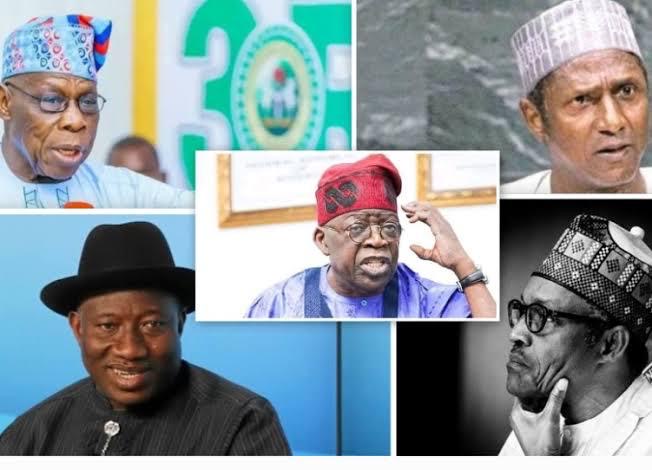
President Olusegun Obasanjo 1999 to 2007
President Obasanjo came into office at the dawn of Nigeria’s Fourth Republic, inheriting a petroleum sector with untapped investment potential. Oil production averaged between 2.1 and 2.5 million barrels per day mbpd, buoyed by high international prices. His administration fostered partnerships with major oil firms and initiated reforms to modernize the sector. However, towards the latter years of his tenure, unrest in the Niger Delta began to emerge, creating the first wave of disruptions that would haunt subsequent administrations.
President Umaru Musa Yar’Adua 2007 to 2010
Yar’Adua’s government was immediately confronted with intense militant activity in the Niger Delta, which caused oil production to fall sharply to about 1.8 mbpd. In response, he launched the 2009 Amnesty Programme, a policy that significantly reduced attacks on oil installations. Although his health challenges cut short his presidency, this peace framework laid a foundation for stability in the years ahead, even if production levels did not immediately rebound to early 2000s highs.
President Goodluck Jonathan 2010 to 2015
Jonathan benefited from the early gains of the Amnesty Programme, with oil production initially recovering to around 2.3 mbpd. However, this progress was undermined by unprecedented oil theft and pipeline vandalism, causing Nigeria to lose billions in revenue annually. While global oil prices were favorable in his early years, the 2014 price crash severely affected fiscal stability. His administration also worked on the Petroleum Industry Bill PIB, but prolonged delays in its passage meant that key sector reforms were postponed.
President Muhammadu Buhari 2015 to 2023
Buhari assumed office at a time when global oil prices had plummeted. Production was further weakened by renewed Niger Delta unrest, frequent pipeline shutdowns, and OPEC plus mandated cuts. Output fluctuated between 1.4 and 1.8 mbpd, well below Nigeria’s full potential. A significant achievement was the passage of the Petroleum Industry Act PIA in 2021, which restructured the sector’s legal framework. However, implementation was slow, and underinvestment in upstream infrastructure limited its immediate impact on production.
President Tinubu 2023 to 2025 – Restoring Nigeria’s Oil Powerhouse Status
President Tinubu’s era has marked a decisive shift in Nigeria’s oil production trajectory. In less than two years, his administration reversed years of underperformance, raising production to 1.507 mbpd in 2025 and surpassing Nigeria’s OPEC quota for the third time in a single year, something not consistently achieved since the early 2000s. This success was not by chance but the result of deliberate, results driven policies.
The administration prioritized aggressive engagement with international oil companies, addressed security threats in the Niger Delta through coordinated inter agency action, and unlocked stalled upstream investments. Strategic diplomacy within OPEC allowed Nigeria to protect its interests while still meeting international commitments. By combining energy policy reforms with infrastructure support, Tinubu restored investor confidence that had eroded under previous governments.
In comparison to Yar’Adua’s militant era struggles, Jonathan’s oil theft crisis, and Buhari’s underinvestment years, Tinubu’s tenure stands out for delivering tangible production gains in record time. His leadership is proving that with the right policies, Nigeria can once again take its place as a leading oil producer on the global stage, turning what was once an era of missed opportunities into one of renewed hope and sustainable growth.
