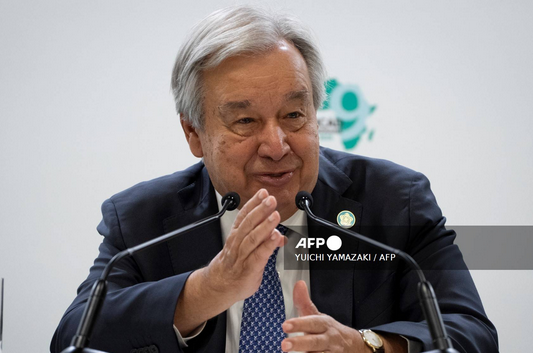
Africa has the potential to become a “renewable superpower,” but unlocking that future will require sustained investment rather than aid, United Nations Secretary-General António Guterres told world leaders on Thursday.
Speaking at the Tokyo International Conference on African Development (TICAD 9), Guterres urged global powers to channel financing and technology into Africa’s clean energy sector, stressing that the continent’s abundant solar, wind, and mineral resources must directly benefit its people.
“We must mobilise finance and technology, so that Africa’s natural wealth benefits African people; we must build a thriving renewables and manufacturing base across the continent,” Guterres said. “Green power in Africa lowers energy costs, diversifies supply chains and accelerates decarbonisation for everyone.”
The conference, hosted in Yokohama, brought together African leaders including Nigeria’s President Bola Tinubu, South Africa’s Cyril Ramaphosa, and Kenya’s William Ruto, alongside Japan’s Prime Minister Shigeru Ishiba. Tokyo is positioning itself as an investment partner for African nations grappling with debt, climate change, and shrinking Western aid.
Debt Crisis Overshadows Growth
While China’s Belt and Road Initiative poured billions into African infrastructure over the past decade, new lending has slowed sharply. According to the Lowy Institute, many developing countries now face a “tidal wave” of debt, owed both to China and private creditors.
Western aid has also contracted, with cuts deepening after former U.S. President Donald Trump dismantled much of the U.S. Agency for International Development (USAID).
Guterres warned that “debt must not drown development,” calling for expanded concessional loans, debt restructuring, and increased financing capacity from global development banks.
Push for Green Investment
At the conference, leaders emphasized the shift from aid dependency to investment-driven growth.
Ruto announced on X (formerly Twitter) that Kenya is negotiating with Toyota for 5,000 electric vehicles, describing the move as part of his country’s “commitment to clean energy.”
In his opening remarks, Prime Minister Ishiba pledged to train 30,000 Africans in artificial intelligence over the next three years and proposed exploring a Japan-Africa Economic Partnership. He also outlined plans for a distribution network connecting African and Indian Ocean states.
Tinubu and Ramaphosa echoed the call for more sustainable partnerships, emphasizing that Africa’s future lies in trade and renewable investment rather than reliance on foreign aid.
“Africa has everything it takes to become a renewable superpower, from solar and wind to the critical minerals that power new technology,” Guterres said.
As global leaders debate Africa’s economic trajectory, the continent’s role in the renewable energy transition is increasingly seen as pivotal to addressing climate change, stabilizing supply chains, and driving long-term sustainable growth.
