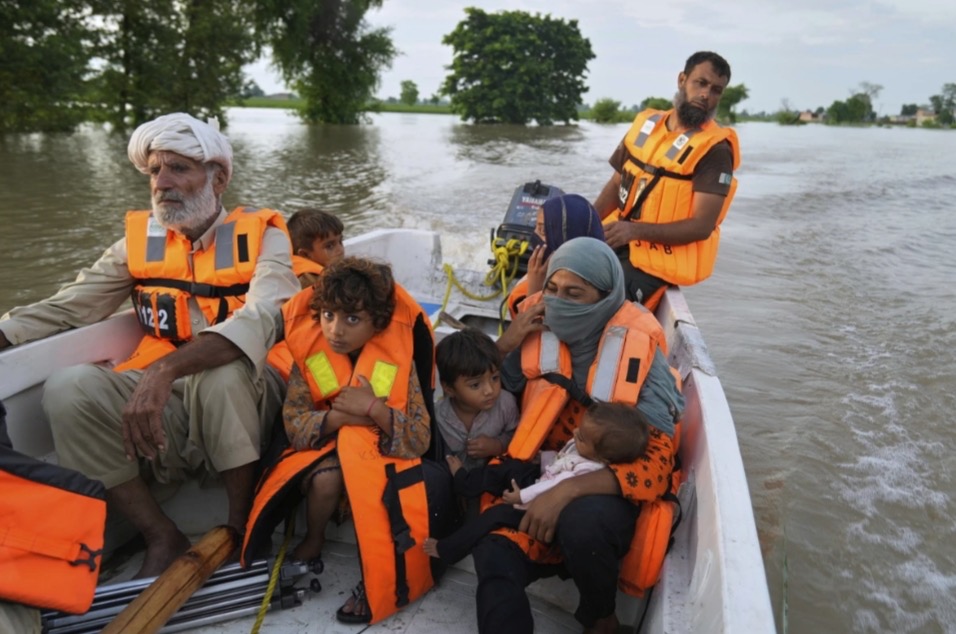
Torrential monsoon rains have unleashed deadly floods and landslides across northern India and eastern Pakistan, leaving at least 34 people dead in Indian-controlled Kashmir and displacing more than 210,000 in Pakistan’s Punjab province, officials said Friday.
Tragedy in Kashmir
In Jammu’s Reasi district, a popular Hindu pilgrimage route to the Vaishno Devi temple was struck by a sudden landslide as hundreds of devotees trekked uphill. At least 34 pilgrims were killed and 18 others injured, prompting authorities to suspend the pilgrimage and launch large-scale rescue operations.
Officials reported that this week’s rainfall was 726% higher than average the most intense August monsoon downpour in the region since 1950. Landslides cut off highways, while flooding damaged the Madhopur barrage and several bridges, severely disrupting transportation and essential supplies.
Widespread Flooding in Pakistan
Across the border in Pakistan’s Punjab province, heavy rains and water releases from upstream dams swelled the Ravi, Chenab, and Sutlej rivers. Entire towns and villages were inundated, forcing over 210,000 people to flee their homes.
Among the hardest-hit areas is Kartarpur in Narowal district, where floodwaters submerged the historic shrine of Guru Nanak, a revered Sikh pilgrimage site. In Lahore and surrounding districts, the Pakistani military and disaster relief agencies evacuated more than 20,000 residents overnight to safer ground.
Since late June, Pakistan has recorded more than 800 deaths linked to floods, landslides, and cloudbursts, with casualties mounting in Khyber Pakhtunkhwa and Punjab.
Emergency Response and Outlook
Rescue teams, including the Indian Army, Pakistan’s military, and disaster management forces, remain deployed across both sides of the border. Relief camps have been set up to provide food, medical care, and shelter to thousands displaced by the disaster.
Meteorologists warn that heavy rainfall is likely to continue in the coming days, heightening the risk of further landslides and river flooding.
Climate scientists say this year’s devastating monsoon season highlights the growing threat of climate change, which has intensified rainfall patterns and made South Asia increasingly vulnerable to extreme weather events.