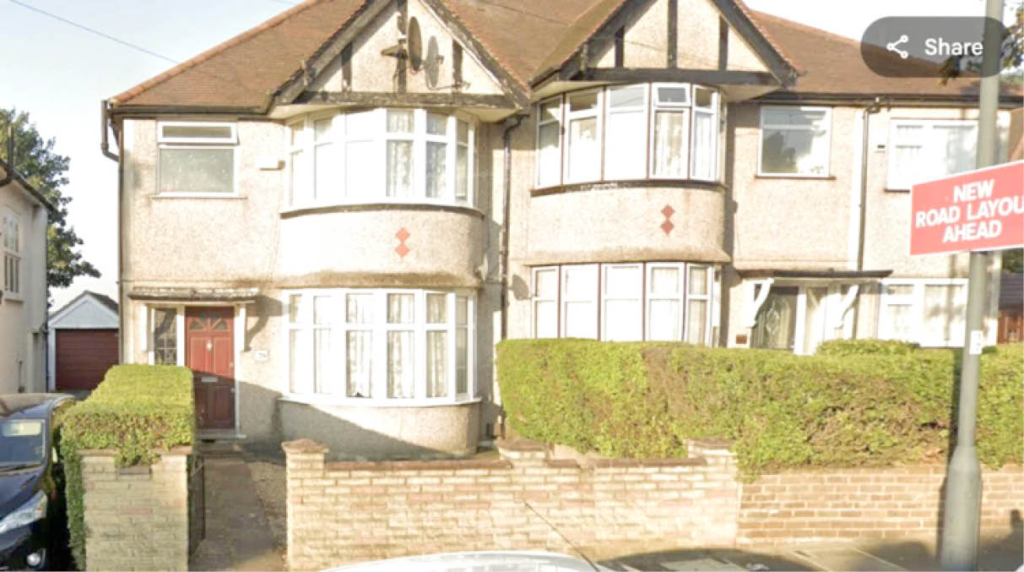
A UK property tribunal has ruled that late Nigerian general Jeremiah Useni secretly bought a London property using a false name, dismissing competing claims over the house that were marred by allegations of forgery, fake deaths, and fabricated identities.
The First-tier Tribunal (Property Chamber) in London, presided over by Ewan Paton, found that neither the applicant, “Ms Tali Shani,” nor Nigerian Senior Advocate Mike Ozekhome, who claimed the property had been gifted to him, could prove ownership of 79 Randall Avenue, London NW2. Instead, the court concluded that the true owner was Useni, a retired lieutenant-general and former minister of the Federal Capital Territory (FCT), who died in France in January 2025.
Useni, once a powerful figure in the Sani Abacha government and a contender to lead Nigeria after Abacha’s death in 1998, was revealed to have used the alias “Tali Shani” when he bought the property in 1993. The tribunal found extensive evidence of forged documents, fabricated relatives, and a fake death used in attempts to claim ownership of the house after Useni’s death.
The case began in February 2023 when Ozekhome applied to register a transfer of the property allegedly executed in his favour by “Mr Tali Shani” in August 2021. He claimed the house was gifted to him “out of gratitude” for years of legal services. But when lawyers claiming to represent “Ms Tali Shani” objected—insisting she was the rightful owner and outraged at the purported transfer—the matter escalated into a sensational dispute.
The tribunal described “a quite extraordinary” series of hearings filled with accusations of forgery, conspiracy, impersonation, and corruption. Central to the case was the identity of “Ms Tali Shani,” who never appeared before the tribunal. Her lawyers later claimed she had died in Nigeria and presented documents including a death certificate, a Nigerian national identity slip, a mobile phone bill, and an obituary notice. But the court found glaring inconsistencies in her supposed death dates, funeral announcements, and supporting documents.
One witness, Anakwe Marcel Obasi, claimed to be her cousin and testified that she had a long romantic relationship with Useni and gave him money to buy the property in the early 1990s. Yet he admitted producing no photographs of himself with her, Useni, or her alleged son, Ayodele Damola. When questioned, he claimed he was “not a photogenic person” and said an official photographer at her funeral was “killed by a bandit two days after the funeral.”
Damola, who said he was her son, also alleged that the transfer of the property to Ozekhome was part of a scheme to repay a ₦54 million debt Useni owed. He contradicted Obasi’s claim that she died of an illness, saying instead that she died in a road accident. The tribunal highlighted glaring discrepancies: her death certificate stated she died in hospital, while an affidavit claimed she died in a crash on October 3, 2023. Even the obituary listed a “thanksgiving service” on Sunday, November 30, 2024 — a date that was actually a Saturday.
The tribunal also heard evidence from Nigeria’s National Identity Management Commission (NIMC) that the NIN slip presented for “Tali Shani” was fake and had been fraudulently obtained using loopholes meant for amputees, with no fingerprints captured and a non-compliant photograph uploaded remotely from Monaco. Police investigators also traced a supposed mobile bill for “Tali Shani” to a Lagos solicitor linked to her legal team, and found that the address listed did not exist.
Judge Paton concluded that “Ms Tali Shani” never existed. “I do not accept that ‘she’ was ever a real living person. I do not accept that ‘she’ therefore died, whether in hospital or in a mysterious car accident on the road to Abuja. I certainly do not accept that ‘she’ purchased this property in London in 1993 in her ‘hey days’. Nor do I accept that Mr. Ayodele Damola is ‘her’ son, or that Mr. Anukwe Obasi is ‘her’ cousin,” the judgment said.
Ozekhome’s case also collapsed. He admitted never knowing “Mr Tali Shani” before 2019 and could not provide proof of any legal work done for him, citing client privilege. He claimed the property was gifted to him for services rendered, but the tribunal found the story false, ruling that “Mr. Tali Shani… did not purchase this property himself in 1993, and so had no title of his own to pass to the respondent.”
While acknowledging that a real man named Mr Tali Shani exists, the tribunal said his claim to have bought the London house at age 20 with proceeds from mango and cattle sales was “implausible and unproven.” Records showed the property was bought in 1993 by one “Philips Bincan,” which the tribunal found to be another alias used by Useni.
In video testimony given in June 2024, Useni confirmed: “I owned it… I bought the property… before I gave it to someone to run… I paid the deposit… then bit by bit…. I bought it… it is my property.” The court found this consistent with documentary evidence and noted that Useni had a history of using false or “coded” names like “Tim Shani” in Jersey bank accounts and companies.
The tribunal ruled that Ozekhome’s application to be registered as the property’s owner must be cancelled, holding that Useni, though deceased, remained the true owner and that ownership now rests with whoever obtains probate of his English assets.
“The final outcome of this case, therefore, is that both parties have failed. Neither ‘Tali Shani’ was who they said they were… The real owner, via a false name, was General Jeremiah Useni,” the judge ruled, calling the case “a contrived story… invented in an attempt to provide a plausible reason” for the transfer.
The judgment will be published, with further action left to relevant authorities.