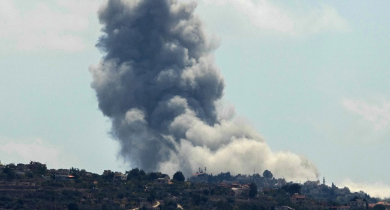
On Monday, Gaza medics reported that Israeli airstrikes on several homes killed at least 18 people, while Hamas asserted it has sufficient resources to sustain its fight nearly a year into the ongoing war.
These strikes came as Israeli Defence Minister Yoav Gallant cautioned that the chances of halting clashes with Hezbollah militants along the Lebanon border were dwindling, stoking fears of a broader regional conflict. Senior Hamas official Osama Hamdan told AFP in an interview from Istanbul, “The resistance has a strong ability to continue,” adding that while there have been martyrs and sacrifices, the experience gained and new recruits to the resistance have strengthened their cause.
His remarks followed Gallant’s recent statement that Hamas, after its October 7 attack that triggered the war, “no longer exists” as a military force in Gaza.
On the ground in Gaza, deadly clashes continued on Monday, with survivors digging through rubble after a strike on the Nuseirat refugee camp in central Gaza. A medic at Al-Awda hospital reported that an airstrike on the Al-Qassas family’s home killed ten people and wounded 15 others. Rashed al-Qassas, a surviving family member, shared, “My house was hit while we were sleeping without warning. Many martyrs, including my sons and little grandsons, were among the victims.”
Gaza’s civil defense agency confirmed that six more Palestinians were killed in a nighttime airstrike on a home belonging to the Bassal family in Gaza City’s Zeitun neighborhood, an area frequently targeted since the war began. In Rafah, two more were killed in an airstrike on the Abu Shaar family home.
The war, ignited by the October 7 attack that resulted in 1,205 deaths in Israel, mostly civilians, has seen 41,226 people killed in Gaza so far, according to the Hamas-run health ministry, though it does not distinguish between civilian and militant casualties. Meanwhile, tensions have escalated in Israel’s northern region, with fears of further escalation between Israel and Hezbollah, whose cross-border exchanges have intensified since early October. Gallant expressed concerns that Hezbollah continues to align with Hamas, limiting the chances of a peaceful resolution along the northern border.
Gallant also addressed the situation in southern Lebanon, reiterating Israel’s aim to remove Hezbollah’s presence there and ensure the safe return of northern Israeli communities. Israeli media reported that U.S. envoy Amos Hochstein arrived on Monday to help defuse tensions between Israel and Hezbollah.
Hezbollah’s deputy chief Naim Qassem stated on Saturday that the group has “no intention of going to war” but warned of significant losses on both sides if conflict erupts.
Cross-border violence between Israel and Lebanon has resulted in 623 deaths in Lebanon, mostly fighters but including 141 civilians, while at least 24 Israeli soldiers and 26 civilians have been killed.
Gallant’s warnings came after Yemen’s Huthi rebels launched a missile at central Israel on Sunday, causing no casualties but provoking a strong response from Prime Minister Benjamin Netanyahu. The Huthis, who have targeted Israel since November in solidarity with Gaza, claimed to have breached Israel’s air defenses, though Israel reported that the missile likely disintegrated mid-air. In July, a Huthi drone strike killed a civilian in Tel Aviv, prompting Israeli retaliatory strikes on Yemen’s rebel-controlled Hodeida port.
Huthi leader Abdul Malik al-Huthi vowed in a televised speech to continue operations as long as the siege on Gaza persists, signaling the potential for further escalations.