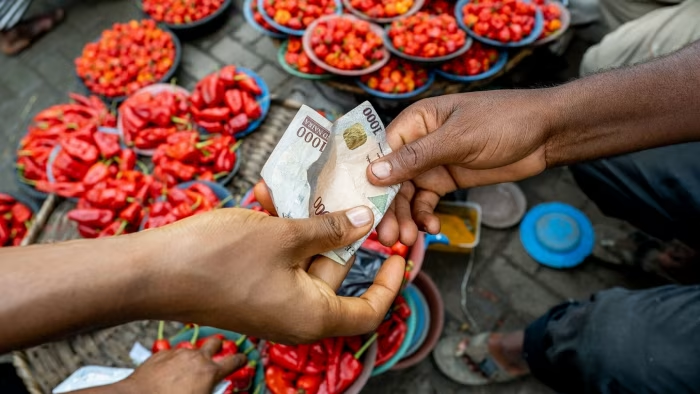
Nigeria’s headline inflation has slowed to 18.02 percent in September 2025, marking the lowest level in three years, according to new data released by the National Bureau of Statistics (NBS). The last time the country recorded inflation in the 18 percent range was in June 2022, based on figures from the Central Bank of Nigeria (CBN).
The NBS said the current inflation rate, on a year-on-year basis, “was 14.68% lower than the rate recorded in September 2024 (32.70%).” The agency noted that this indicates a notable easing in price pressures when compared to the same period last year.
“However, on a month-on-month basis, the Headline inflation rate in September 2025 was 0.72%, which was 0.02% lower than the rate recorded in August 2025 (0.74%),” the bureau stated. “This means that in September 2025, the rate of increase in the average price level was lower than the rate of increase in the average price level in August 2025.”
The food inflation rate also recorded a decline, dropping to 16.87 percent year-on-year. The NBS said this figure is 20.9 percent lower compared to the rate recorded in September 2024 (37.77 percent). “On a month-on-month basis, the Food inflation rate in September 2025 was -1.57%, down by 3.22% compared to August 2025 (1.65%),” the report said.
“The decrease can be attributed to the rate of decrease in the average prices of Maize (Corn) Grains, Garri, Beans, Millet, Potatoes, Onions, Eggs, Tomatoes, Fresh Pepper etc.”
According to the agency, the average annual food inflation rate for the twelve months ending September 2025 stood at 24.06 percent, which was 13.47 percentage points lower than the average annual rate recorded in September 2024 (37.53 percent).
Year-on-year, food inflation was highest in Ekiti (28.68 percent), Rivers (24.18 percent), and Nasarawa (22.74 percent), while Bauchi (2.81 percent), Niger (8.38 percent), and Anambra (8.41 percent) recorded the lowest increases. On a month-on-month basis, Zamfara (15.62 percent), Ekiti (12.77 percent), and Sokoto (12.55 percent) posted the highest spikes, while Akwa Ibom (-12.97 percent), Borno (-12.95 percent), and Cross River (-10.36 percent) recorded declines.
This marks the sixth consecutive month of slowing inflation since April 2025. Lukman Otunuga, senior research analyst at Forex Time (FXTM), previously linked the trend to “a combination of softer food prices and a strengthening naira.”
At its September Monetary Policy Committee (MPC) meeting, the CBN cut interest rates to 27 percent — the first rate reduction in five years — citing sustained disinflation momentum. “This deceleration underpinned by monetary policy tightening, exchange rate stability, increased capital inflows and surplus current account balance have helped to broadly anchor inflation expectations,” CBN governor Olayemi Cardoso said.
Cardoso added that continued moderation in petrol prices and an uptick in crude oil production also contributed to easing inflationary pressure.
Economists say the stability of the foreign exchange market and improved food supply are key to sustaining this disinflation trend, even as they warn that inflation risks remain if structural reforms stall.
