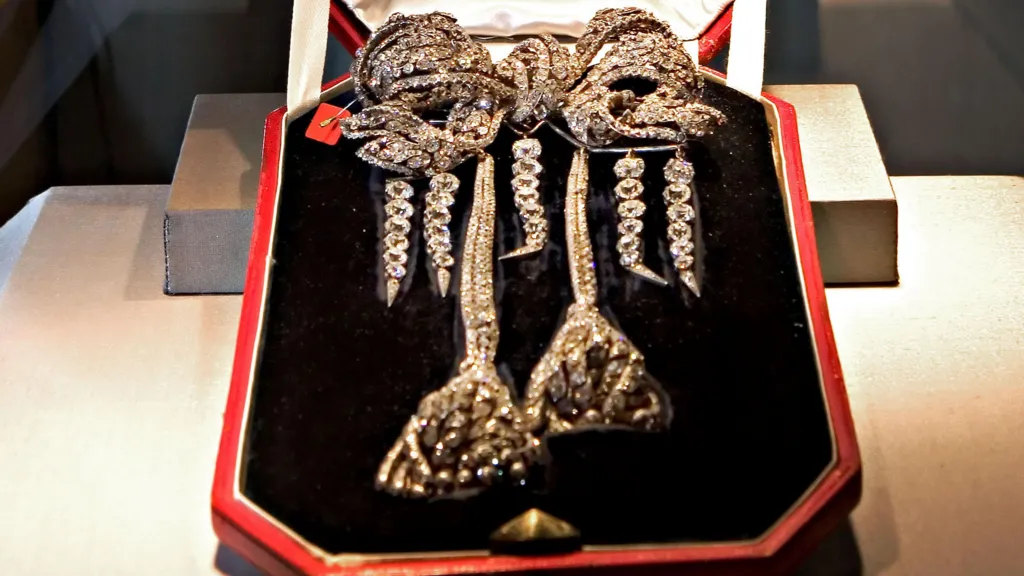
In what authorities are calling the most audacious theft at the Louvre Museum since the Mona Lisa vanished in 1911, a professional gang made off with a collection of historic French crown jewels in a lightning-fast operation that has sparked intense scrutiny of the museum’s security measures. According to France’s new interior minister Laurent Nuñez, the thieves who struck the Apollo Gallery on Sunday morning were “clearly professional.” They appeared to have studied the site in advance, executed a swift and calculated plan, and escaped with their haul in less than seven minutes.
Investigators say the gang arrived in a truck outfitted with an elevating platform similar to those used by moving companies. They positioned the vehicle outside the museum, raised themselves to the first-floor window, and used a disc-cutter to breach the glass. Once inside the opulent gallery, they headed straight for two cases containing what remains of the French crown jewels, mostly dating from the 19th Century and linked to Napoleon and Napoleon III’s imperial families.
Among the eight stolen pieces were the Marie-Louise necklace, a pair of earrings, diadems, brooches, and a tiara once worn by Empress Eugénie, wife of Napoleon III. “They knew what they wanted,” Nuñez said. The Empress Eugénie crown was also taken but recovered damaged near the museum, believed to have been dropped during the gang’s escape.
In a statement, the culture ministry confirmed that alarms had triggered properly. Five members of the museum staff, who were either inside or close to the gallery, followed security protocol by alerting authorities and safeguarding visitors. The thieves allegedly attempted to set their vehicle on fire outside the museum but were stopped when a staff member intervened.
The heist unfolded just a short walk from global masterpieces such as the Mona Lisa, but experts note that criminal networks rarely target world-famous paintings because they are impossible to sell. Jewels, however, present a different opportunity. Crowns and diadems—despite their cultural value—can be broken apart and sold in fragments, and even notable diamonds can be recut and fenced on the black market. Though the return price won’t match the artefacts’ true worth, it still represents a lucrative payout.
France has recently seen a rise in thefts targeting cultural institutions. In September, thieves stole €600,000 worth of raw gold from the Natural History Museum in Paris, and porcelain valued at €6 million was taken from a museum in Limoges. These incidents prompted a national security review, with new measures being rolled out gradually across museums.
“We are well aware that French museums are vulnerable,” Nuñez acknowledged. The Louvre, famed for its vast collection of masterpieces, has historically avoided large-scale thefts thanks to strict security. The last significant disappearance occurred in 1998, when Camille Corot’s Le Chemin de Sèvres vanished from a wall. But the most infamous theft remains the 1911 heist of Leonardo da Vinci’s La Joconde, now known worldwide as the Mona Lisa. The thief hid overnight in a closet, removed the painting from its frame, wrapped it in his smock, and calmly walked out. It resurfaced three years later in Italy and was returned.
This time, experts warn, recovery is unlikely unless authorities make immediate arrests. The primary objective for the gang will be to dismantle and sell the jewels as quickly as possible. In the world of art crime, speed favors the thieves.
#LouvreHeist #ArtCrime #CrownJewels
