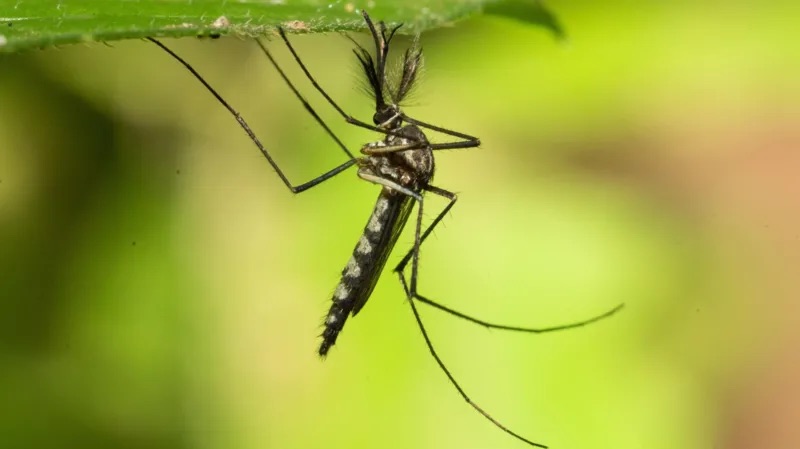
REYKJAVIK, ICELAND — Iceland, which has long stood with Antarctica as one of the world’s last havens free of endemic mosquito populations, has recorded its first-ever sighting of the insect in the natural environment, marking a significant development for the island’s ecosystem.
The historic discovery was made by insect enthusiast Björn Hjaltason in Kiðafell, Kjós, approximately 30 kilometers north of the capital, Reykjavik. Hjaltason’s observation was made during his routine insect trapping, a method utilizing sweet, fermented liquid.
Describing the initial find, Mr. Hjaltason recounted the moment: “At dusk on October 16, I caught sight of a strange fly on a red wine ribbon. I immediately suspected what was going on and quickly collected the fly. It was a female.”
The specimens were subsequently sent to the Natural Science Institute of Iceland, where entomologist Matthías Alfreðsson confirmed the finding, identifying the insects as Culiseta annulata, a common and cold-tolerant species found across Northern Europe.
Mr. Alfreðsson elaborated on the nature of the find: “Three specimens of Culiseta annulata were found in Kiðafell, Kjós, two females and one male. They were all collected from wine ropes during wine roping aimed at attracting moths.”
While the Culiseta annulata species is not known to carry dangerous diseases, its appearance has raised questions about the role of climate change. Iceland is warming at a rate four times faster than the rest of the Northern Hemisphere, which creates more favorable conditions. However, the entomologist noted that this particular species is well-adapted to colder climates, capable of surviving harsh Icelandic winters by sheltering in basements and barns. As such, the presence of the insects could simply “indicate a recent introduction to the country, possibly via ships or containers.”
Experts emphasize that continued monitoring, particularly into the spring, will be necessary to determine if the species is capable of establishing a permanent, breeding population on the island.
