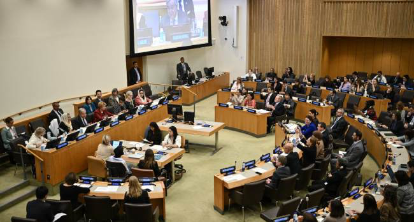
As violent conflicts continue to claim civilian lives worldwide, critics of the United Nations are expressing frustration, claiming the organization is failing to fulfill its primary mission of maintaining peace and international security. This discontent comes as the UN hosts its annual gathering of world leaders in New York, with many pointing to the ongoing bloodshed in Gaza, Ukraine, and Sudan as evidence of its shortcomings.
Experts warn, however, that the UN is being unfairly scapegoated for crises that extend beyond its control. The organization, while central to global diplomacy, faces significant challenges, particularly within the Security Council, which has become largely ineffective due to deep divisions among its permanent members. The ongoing vetoes by the United States and Russia have left crucial issues—such as the conflicts in Gaza and Ukraine—unaddressed, further complicating the UN’s efforts to mediate and enforce peace.
UN Secretary-General Antonio Guterres defended the organization, stating, “It’s obvious that we are not having peace and security in the world, and it’s obvious that it’s not because of the UN as an institution that that doesn’t happen. It’s because of member states.” His remarks reflect a growing sentiment that the UN’s limitations stem from the actions and inactions of its member countries, rather than institutional failures.
Slovenia’s UN ambassador, Samuel Zbogar, who currently holds the presidency of the Security Council, echoed this sentiment. He condemned the “poisonous mood” within the council and criticized the continuous deadlock caused by the opposing agendas of Washington and Moscow. Zbogar emphasized that these divisions undermine the council’s legitimacy and relevance, raising concerns about its ability to address pressing global issues.
Richard Gowan of the International Crisis Group highlighted the historical context of the UN’s struggles with major power conflicts. “The UN has never been able to stop conflicts involving the major powers,” he noted, suggesting that countries with significant military capabilities often use the UN as a shield while pursuing their own interests. He added that having the U.S. and Russia engaged in discussions within the Security Council is preferable to outright military confrontation.
As the world grapples with increasing violence and instability, the effectiveness of the UN as a peacekeeping body remains a contentious topic. While many call for reforms to enhance its ability to act decisively in crises, the underlying political dynamics among member states continue to pose significant challenges to its mission.