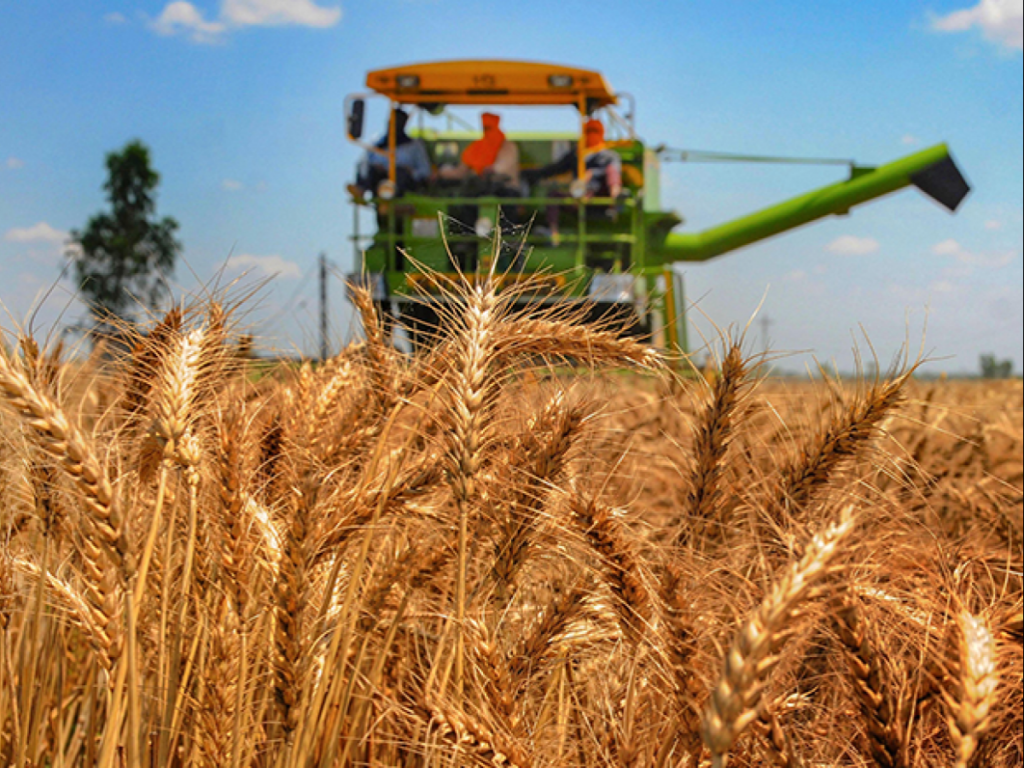
The Federal Government has unveiled an ambitious target of generating N160 billion worth of wheat output from 80,000 farmers participating in the 2025/2026 dry-season wheat production programme under the National Agricultural Growth Scheme–Agro Pocket (NAGS-AP).
Supported by a $134 million facility from the African Development Bank (AfDB), the programme aims to boost domestic wheat production, cut import dependence, and strengthen national food security.
Under the scheme, farmers will receive a package of subsidised inputs, including certified seeds, fertiliser, agrochemicals, mechanisation services, and extension support. The Federal Government has set a 25% subsidy on wheat seeds and 50% subsidy on fertilisers to reduce production costs and encourage mass participation.
A total of 40,000 hectares has been earmarked for wheat cultivation nationwide, with 3,000 hectares allocated to Borno State, covering about 6,000 registered farmers. The programme is expected to run across 16 wheat-producing states, including Kano, Jigawa, Kaduna, Kebbi, Yobe, Taraba, Bauchi, and others.
Government projections indicate that improved seeds and modern agronomic practices supplied through NAGS-AP could significantly raise yields, building on recent successes where wheat output in participating farms increased from about 1.7 tonnes per hectare to as high as 4–6 tonnes per hectare.
Officials say the initiative aligns with the national goal of expanding local wheat cultivation, which recently surpassed 118,000 hectares across multiple states.
The Federal Ministry of Agriculture reaffirmed that the 2025/2026 intervention is part of a broader strategy to position Nigeria for large-scale wheat self-sufficiency, job creation, and economic diversification. Visit www.jocomms.com for more news.
