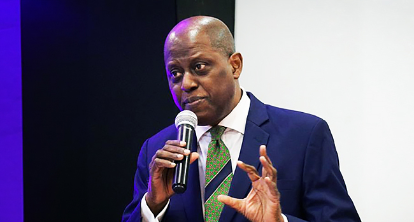
The Central Bank of Nigeria (CBN) has credited its series of interest rate hikes over the past year with restoring Nigerians’ confidence in the naira. CBN Governor Olayemi Cardoso made this statement during a press briefing on Tuesday following the conclusion of the 297th Monetary Policy Committee (MPC) meeting in Abuja.
Cardoso announced that the MPC has once again raised the Monetary Policy Rate (MPR) by 50 basis points, moving from 26.75% to 27.25%, in a bid to curb inflation, which currently stands at 32.15%. Since his appointment as CBN governor in September 2023, Cardoso has overseen a total increase in the MPR by 8.5% over 12 months, a move intended to combat economic instability and restore confidence in the Nigerian currency.
Speaking about the impact of these monetary policies, Cardoso acknowledged the difficulties many Nigerians are currently facing but emphasized the importance of these measures for long-term economic stability. “We came into a very loose money supply situation between 2017 and 2023, witnessing a huge liquidity injection into the system,” he explained. Cardoso highlighted the rapid rise in money supply, from N19 trillion in 2015 to N54 trillion in 2023, driven largely by excessive borrowing and money printing during his predecessor’s tenure.
Under Cardoso’s leadership, the naira has experienced significant depreciation, with the currency now exchanging at over ₦1,600 to the US dollar, compared to around ₦700/$1 in September 2020. Despite these challenges, Cardoso remains confident that the series of interest rate hikes has had a positive effect, particularly in encouraging Nigerians to retain confidence in the naira.
“People had begun to lose confidence in the currency,” he noted. “However, we believe that these multiple rate hikes have helped people to now begin to take a different look at their currency, and there is a greater incentive to hold the naira.”
Cardoso also defended the CBN’s policies, stating that while they have brought short-term difficulties, they are necessary to address the systemic inefficiencies and excess liquidity that have plagued Nigeria’s economy in recent years. He urged patience, promising that the tough measures being taken would yield long-term benefits, including lowering inflation and attracting foreign investment back into the country.
“Tough though they may be, we have no choice but to deploy these tools to rein in the excess liquidity in the system, high inflation, and encourage portfolio investors to come back and take interest in Nigeria,” he concluded.
