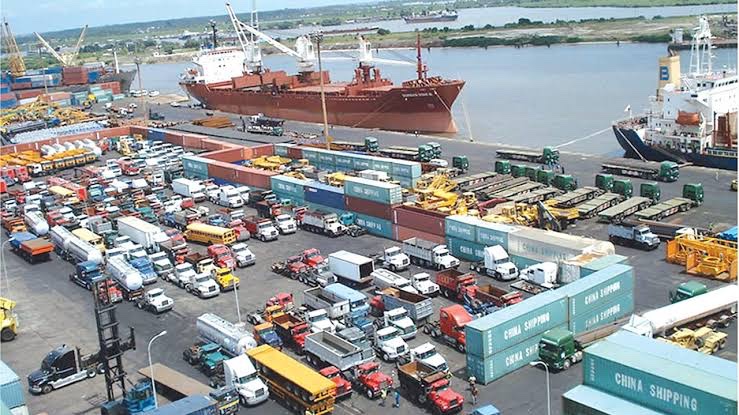
The Federal Government has proposed a shift in payment structures for the Nigerian Maritime Administration and Safety Agency (NIMASA) and the Nigerian Ports Authority (NPA), advocating for all charges, fees, fines, and other payments to be made in Naira rather than foreign currencies.
The initiative, part of the upcoming economic stabilization bill, was disclosed during a briefing at the State House in Abuja by Bayo Onanuga, Special Adviser to the President on Information and Strategy. Onanuga noted that this amendment would be included in the bill, which will soon be presented to the National Assembly by the President.
He explained, “The second one has to do with the operating laws guiding NIMASA and Nigerian Port Authority (NPA). The amendment under that in the economic stabilization bills is that all their fees, charges, levies, fines, and other monies accruing to them and payable to those agencies will now be paid in Naira at the applicable exchange rate.”
Prior to this proposal, NIMASA and NPA charged in US dollars. The move to collect payments in Naira is part of a broader government push to emphasize the use of the national currency and reduce the pervasive reliance on the US dollar across the Nigerian economy.
“This government wants to put a lot of emphasis on our national currency instead of everything being dollarised in our economy,” Onanuga added.
The proposed changes are expected to ease pressure on local businesses that have been burdened by high exchange rates, while also supporting the government’s larger economic goals of stabilizing and strengthening the Naira.
With the proposal now set for legislative debate, the implications for the maritime and port industries are likely to be significant, especially for foreign operators who have historically made payments in dollars. The development reflects the government’s broader agenda to localize transactions and reinforce the Naira in key economic sectors.
More details on the proposed bill are expected as it is tabled before the National Assembly in the coming weeks.
