By Nwanze A. Moses
Introduction: A Party in Freefall
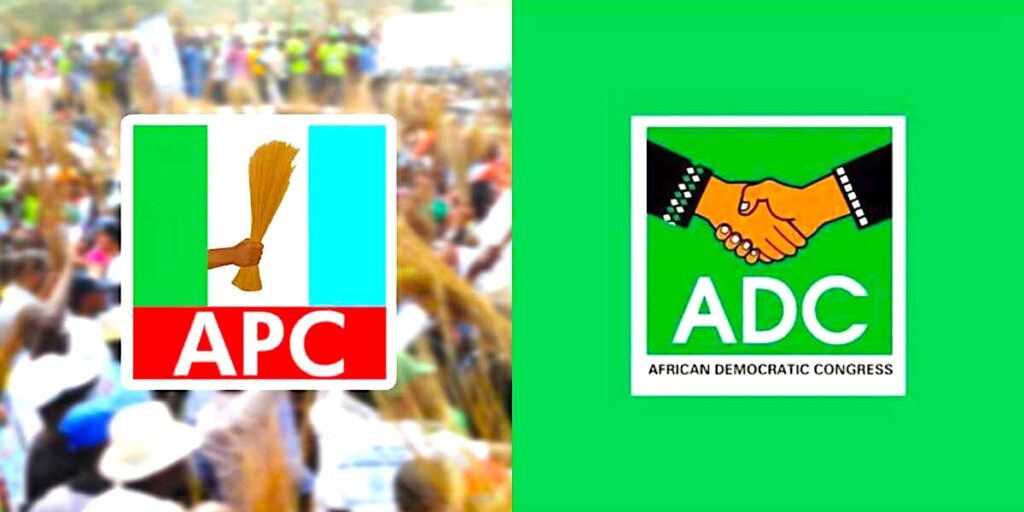
As Nigeria hurtles toward the 2027 general elections, the People’s Democratic Party (PDP)—once Africa’s largest opposition force and the ruling party for 16 uninterrupted years—finds itself mired in an existential crisis. What began as simmering post-2023 election tensions has erupted into open warfare, with factions led by Federal Capital Territory Minister Nyesom Wike clashing against the party’s national leadership under Acting Chairman Umar Iliya Damagum and allies like Governors Seyi Makinde and Bala Mohammed. Mutual expulsions, violent clashes at the party secretariat, and courtroom battles have left the PDP fractured, with its structures eroded and membership hemorrhaging. This internal implosion, described by observers as a “suicide pact,” not only threatens the PDP’s survival but also creates fertile ground for its rivals: the ruling All Progressives Congress (APC) and the rising African Democratic Congress (ADC). While the APC reaps immediate structural advantages, the ADC positions itself as a principled alternative, potentially reshaping Nigeria’s opposition landscape.
The PDP Crisis Unfolded: From Betrayal to Breakdown
The roots of the PDP’s turmoil trace back to the 2023 elections, where the G5 governors—Wike, Samuel Ortom, Okezie Ikpeazu, Ifeanyi Ugwuanyi, and Seyi Makinde—openly sabotaged the party’s presidential candidate, Atiku Abubakar, in a bid to undermine then-candidate Bola Tinubu’s loss. Fast-forward to late 2025, and the fissures have widened into chasms. On November 18, rival factions converged at the PDP national secretariat in Abuja, leading to teargas deployment by police and chaotic scenes that symbolized the party’s descent into anarchy.
The escalations have been swift and brutal. The PDP’s National Convention in Ibadan expelled Wike, National Secretary Samuel Anyanwu, and others like Ayo Fayose for alleged anti-party activities. In retaliation, Wike’s bloc affirmed the expulsion of 18 high-profile figures, including Makinde and Bala Mohammed, citing gross misconduct under the party’s 2017 constitution. Court interventions have only prolonged the agony: A Federal High Court in Abuja deferred hearings on suits challenging the convention’s legitimacy until January 2026, while earlier rulings halted the party’s national convention in October.
Chieftains like Bode George warn that this “naked shame” tarnishes Nigeria’s democratic image, and PDP insider Umar Sani decries the Wike faction’s “illegitimate” sanctions as the desperate acts of the already-expelled. The result? A once-mighty party, with structures in all 774 local government areas, now “gasps for breath” under self-inflicted wounds, its moral authority shattered by ego and betrayal.
APC’s Windfall: A Path to Unchecked Dominance
For the APC, the PDP’s meltdown is nothing short of a political gift. As defections cascade and opposition cohesion crumbles, President Bola Tinubu’s party solidifies its grip on power, inching Nigeria closer to a de facto one-party state. The most vivid example unfolded in Rivers State on December 5, 2025, when Speaker Martins Amaewhule and 15 other lawmakers—previously aligned with Wike—formally defected from the PDP to the APC, citing the national crisis as the tipping point. This mass exodus hands the APC full control of the Rivers Assembly, a strategic oil-rich hub, despite a recent “peace deal” with Governor Siminalayi Fubara.
Wike himself, now a key APC ally despite his nominal PDP ties, blamed the defections squarely on the party’s “deepening crisis,” urging PDP leaders to “put its house in order” or risk irrelevance. This sentiment echoes broader trends: In the Senate, the APC now boasts 72 seats to PDP’s 28, bolstered by earlier defections like Senator Ahmed Wadada’s in September. Even in Zamfara, while two APC lawmakers defected to PDP locally, the national hemorrhage favors the ruling party overall.
The gains are multifaceted. A weakened PDP means smoother legislative passage for APC policies, reduced electoral threats in 2027, and a narrative of inevitability that deters potential challengers. As one analyst notes, the PDP’s “fragile” state after dragging the crisis too long hands the APC “more strength” through attrition. In essence, the APC enjoys not just numerical superiority but a psychological edge: Nigerians see a unified front against a divided foe.
ADC’s Opportunity: Rising from the Ashes as the True Alternative
If the APC capitalizes on PDP’s chaos for dominance, the African Democratic Congress (ADC) emerges as the beneficiary of its moral vacuum. Long overshadowed, the ADC is surging as a “principled” platform amid the PDP’s “internal cannibalism,” attracting disillusioned heavyweights and positioning itself for 2027.
Atiku Abubakar, vindicated by his long-standing warnings of PDP betrayal, has declared the ADC “the only alternative Nigerians have,” rallying support with promises of competence over treachery. High-profile joins include former Sokoto Governor Aminu Tambuwal, ex-Attorney General Abubakar Malami, and ex-Kaduna Governor Nasir el-Rufai, forming a coalition that challenges APC’s grip in key states. Governors like Osun’s Ademola Adeleke, Delta’s Sheriff Oborevwori, and others from PDP’s crumbling ranks are reportedly eyeing exits, further swelling ADC’s ranks.
The ADC’s appeal lies in its “moral clarity and reinvigorated national consciousness,” contrasting PDP’s ego-driven implosion. Yet challenges persist: Peter Obi, the 2023 Labour Party candidate, has flagged “unsigned agreements” on zoning and office rotation as shaky foundations for the coalition. Still, as PDP wanes, the ADC threatens APC in multiple states, with Atiku’s camp predicting an outright 2027 victory. Political realignments over the past year underscore this: The ADC isn’t just gaining numbers—it’s capturing the narrative of renewal.
Conclusion: A Bipartisan Bonanza, But for How Long?
The PDP’s 2025 crisis is a tale of hubris meeting reality, handing the APC unbridled consolidation and the ADC a launchpad for resurgence. For Tinubu’s APC, it’s a buffer against scrutiny, with defections ensuring legislative ease and electoral firewalls. For the ADC, it’s an invitation to inherit the opposition mantle, blending Atiku’s experience with fresh alliances to contest APC’s hegemony.
Yet, this realignment isn’t without risks. An enfeebled PDP could foster complacency in the APC, breeding its own crises, while the ADC must navigate coalition fragilities to avoid PDP’s fate. As 2027 looms, Nigerians watch: Will the PDP’s ashes fertilize a stronger democracy, or merely entrench division? The gains for APC and ADC are clear today, but tomorrow’s elections will test if they can deliver beyond opportunism. In a nation weary of infighting, the real winner may yet be the party that rebuilds trust first.
