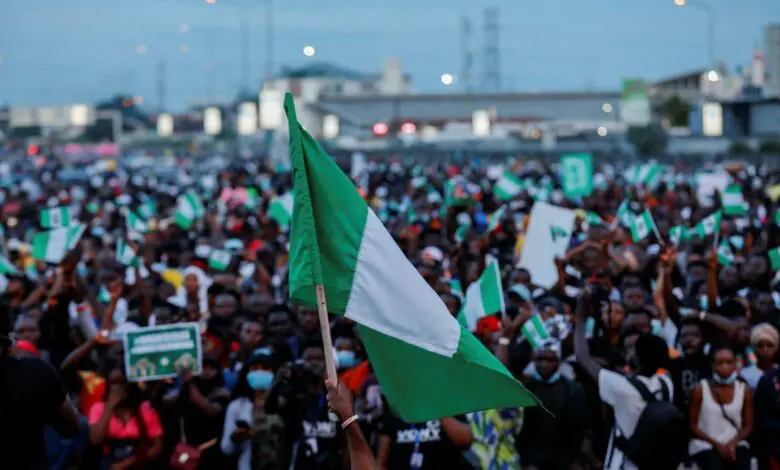
As Nigeria celebrates 64 years of independence, thousands of citizens gathered in the nation’s economic hub, Lagos, and the capital, Abuja, to protest soaring living and energy costs. The protests, tagged “FearlessInOctober,” were organized on social media and come just weeks after the August #EndBadGovernance demonstrations.
In Abuja, protesters assembled in the Utako area, waving the Nigerian flag and holding banners demanding reforms. Slogans such as “EndBadGovernance,” “Diaspora Voting,” and “EndHighLivingCosts” were seen throughout the demonstration. Meanwhile, in Lagos, similar scenes unfolded as youths blocked major roads around Ikeja UnderBridge, causing a standstill in vehicular traffic on a public holiday.
Protesters in both cities voiced opposition to President Bola Tinubu’s economic policies, particularly the removal of the petrol subsidy and the unification of exchange rates, which they argue have led to skyrocketing inflation and unbearable living costs. Since Tinubu took office in May 2023, petrol prices have surged from around N200 to over N1,000 per litre, and electricity tariffs have quadrupled, severely impacting both businesses and households.
Despite the unrest, security forces remained present but at a distance, avoiding direct confrontations with demonstrators.
In his Independence Day address, President Tinubu acknowledged the economic difficulties and appealed for patience, assuring the public that his administration is working on policies to reduce the cost of living. He expressed empathy for those affected by the reforms and promised that relief measures are being implemented for the benefit of all Nigerians.
The protests reflect growing frustration among the population, with many citizens calling for urgent action to address the escalating cost of living.
