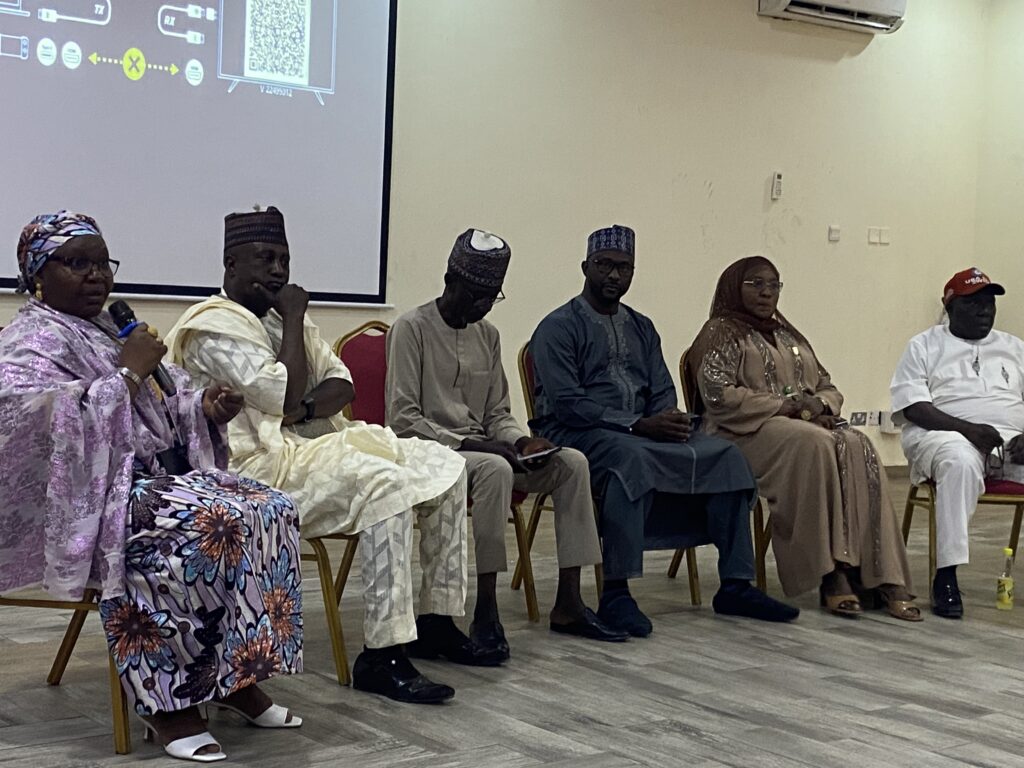
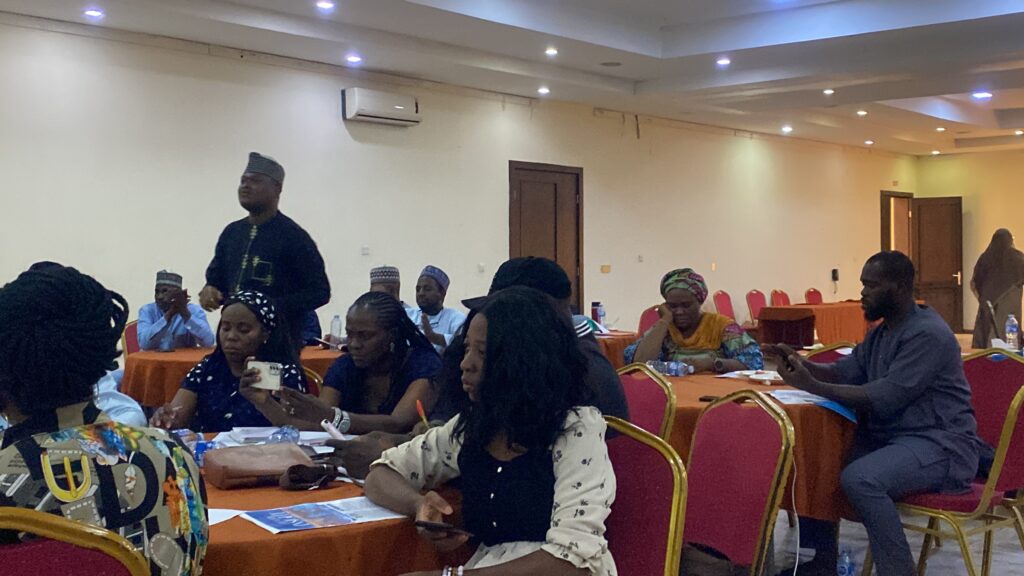
Kaduna State has taken a major step toward strengthening its education system with renewed commitment to the institutionalization of Life Skills education across public secondary schools. This development was highlighted at a one-day follow-up critical stakeholders’ meeting held under the Adolescent Girls Initiative for Learning and Empowerment (AGILE) Project.
The meeting featured a media address delivered by the Executive Director of the Centre for Girls’ Education (CGE), Habiba Mohammed, who emphasized that the gathering marked a transition from pilot interventions to full system-level reform in preparing young people, particularly girls, for life beyond the classroom .
Speaking before members of the press and key stakeholders, Habiba Mohammed acknowledged the presence of senior government officials, including the Honourable Commissioner for Education in Kaduna State, Professor Abubakar Sani Sambo, and senior members of the Kaduna State House of Assembly. She noted that their participation demonstrated strong political will and institutional leadership toward education reform in the state .
According to her, the media briefing provided journalists with a rare opportunity to directly engage with policymakers shaping the future of education in Kaduna State. She explained that discussions at the meeting went beyond program implementation to address policy direction, legislative intent, and long-term transformation of the education system.
Habiba Mohammed stated that the outcome of the meeting was significant, as it signaled a shift from project-based experimentation to sustainable reform. Central to this shift is the proposed institutionalization of Life Skills as a co-curricular subject in public secondary schools across Kaduna State, through an ongoing draft bill currently under consideration .
She explained that for over eighteen years, the Centre for Girls’ Education has worked across Northern Nigeria and parts of West Africa to ensure that schooling equips girls with essential skills, confidence, and agency. This effort has been driven through CGE’s Safe Space model, which integrates life skills, literacy, numeracy, health education, and leadership training in environments trusted by families and communities.
The Executive Director noted that evidence from large-scale programmes, including AGILE supported by the World Bank and the Adolescent Girls Initiative supported by UNFPA, has consistently shown positive outcomes. These include improved school retention, delayed early marriage, enhanced decision-making ability among girls, and stronger relationships between schools, families, and communities .
She stressed that Life Skills education should no longer be regarded as a “soft” intervention, but rather as a foundational component that protects learning outcomes, dignity, and future opportunities for young people.
The meeting also reviewed an emerging institutional framework designed to embed Life Skills education into Kaduna State’s education system. This framework includes formal policy and legal integration, adoption of the Life Skills curriculum, and the creation of dedicated budget lines to ensure long-term sustainability in public schools.
Habiba Mohammed further highlighted the importance of governance and accountability structures discussed at the meeting. These structures assign clear leadership roles to the Ministry of Education, the State Universal Basic Education Board (SUBEB), the Senior Secondary Schools Education Board, and the Kaduna State School Quality Assurance Authority. Integrating Life Skills indicators into existing monitoring systems, she said, would ensure continuous evaluation and improvement of the reform process.
Capacity building was identified as another critical pillar of the reform. The plan involves moving teacher training, mentorship, and refresher programmes from temporary project units into permanent ministry structures. CGE reaffirmed its commitment to supporting Kaduna State as a technical and learning partner throughout this transition.
In her closing remarks, Habiba Mohammed emphasized that institutionalizing Life Skills education is about redefining quality education to ensure that learners, especially girls, acquire competencies that enable them to stay in school, stay safe, and transition confidently into adulthood. She described Kaduna State as positioning itself as a regional leader in this reform effort.
She concluded by calling for sustained political will, adequate financing, and continued collaboration among stakeholders, expressing optimism that the foundation laid at the meeting would lead to lasting improvements in education outcomes for young people in Kaduna State