In a decisive move to address Nigeria’s escalating road safety concerns, Vice President Kashim Shettima has called for a complete overhaul of the country’s road safety systems. This comes in response to the growing number of traffic-related accidents nationwide, a trend that has sparked national concern.
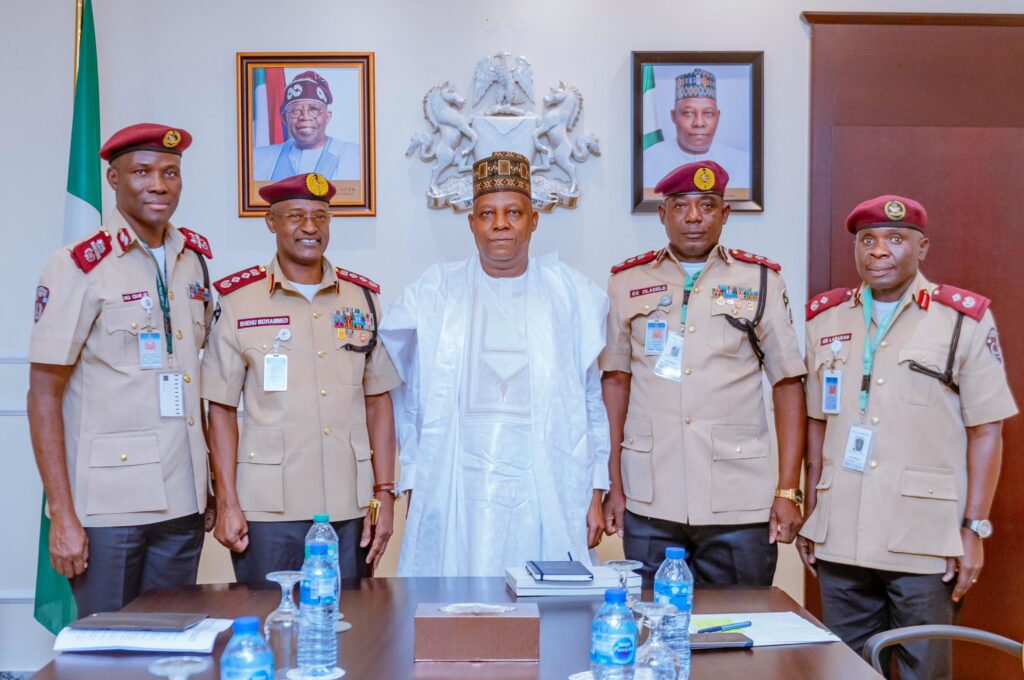
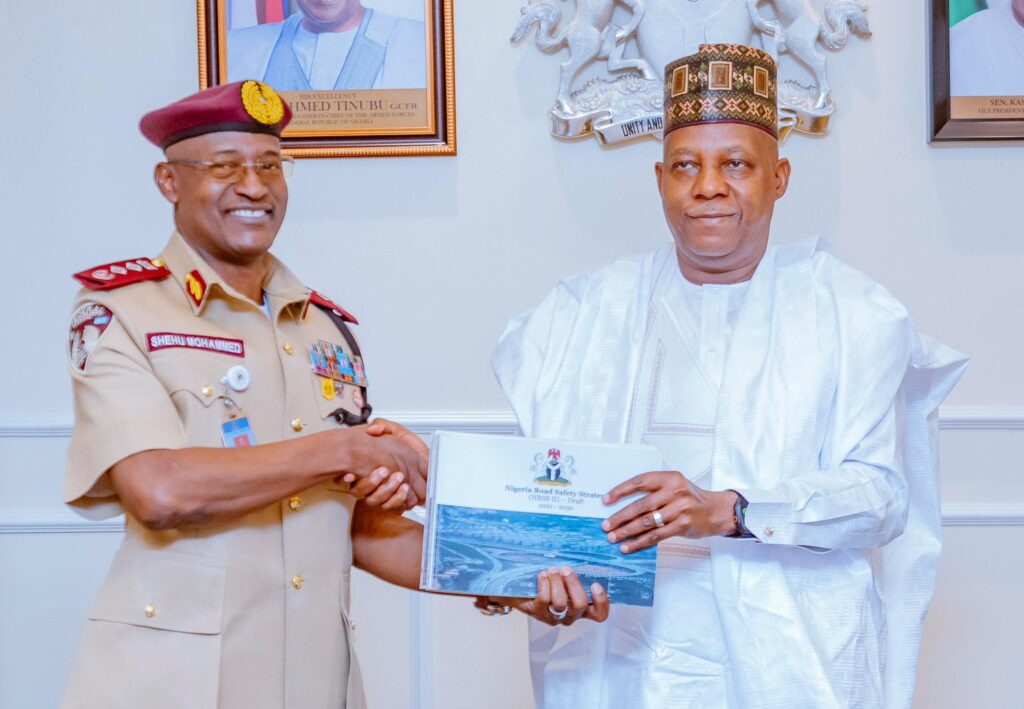
The Vice President issued the directive during a meeting held on Friday at the Presidential Villa with the leadership of the Federal Road Safety Corps (FRSC), led by Corps Marshal Shehu Mohammed. The meeting highlighted the urgency of reforming the current road safety framework and adopting innovative strategies to significantly reduce traffic incidents.
Shettima announced plans to inaugurate the National Road Safety Advisory Council, a key part of the government’s strategy aimed at cutting road traffic accidents by half before the year 2030. The council will focus on implementing long-term safety measures, coordinating efforts between federal, state, and local authorities, and promoting international best practices.

“We need a comprehensive solution for our road safety challenges. The entire system is not where it should be,” VP Shettima stated. He emphasized the need for modern, technology-driven approaches and stronger enforcement of traffic laws, drawing inspiration from the success stories of countries like Dubai and the United Kingdom.
“In Dubai and the UK, traffic violators are easily identified through automated systems, and fines are deducted directly from their bank accounts. This kind of discipline is what we need to instill in Nigeria,” Shettima said, underscoring the role technology can play in fostering road discipline.
VP Shettima, who also chairs the National Road Safety Advisory Council, pointed out the link between road safety and national security, noting that the FRSC’s role overlaps with that of the police. “Road safety is part of our security architecture, and it must be given priority if we are to maintain peace and order,” he added.
Citing the effective security measures he recently observed in Enugu State, Shettima expressed optimism that similar innovations could be applied nationwide. “In Enugu, the government has implemented a surveillance system covering the entire state, including forest areas. Such foresight can be replicated to address road safety concerns,” he explained.
Corps Marshal Shehu Mohammed reiterated the significance of the upcoming advisory council, which will play a pivotal role in achieving the goals outlined in the Nigeria Road Safety Strategy 2021-2030. “The aim is to reduce road traffic crashes by 50% within the next six years,” Mohammed noted.
The National Road Safety Advisory Council will include six governors representing the geo-political zones, several federal ministers, the National Security Adviser, and the President of the Association of Local Governments of Nigeria (ALGON). This diverse membership reflects the collective responsibility required to tackle the road safety crisis.
With these new measures, the federal government aims to create a safer, more disciplined driving culture and drastically reduce the loss of lives on Nigerian roads.
