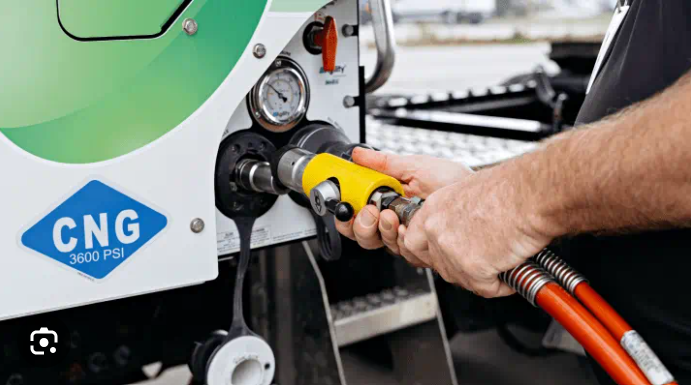
Farouk Ahmed, the Chief Executive of the Nigerian Midstream and Downstream Petroleum Regulatory Authority, has revealed that Nigeria has fewer than 50 Compressed Natural Gas (CNG) compression stations available for its 200 million citizens. This situation persists despite federal efforts through the Presidential Compressed Natural Gas Initiative, which aims to provide a viable alternative to expensive fossil fuels like petrol and diesel.
Speaking at the Nigeria Association of Energy Correspondents conference in Lagos, Ahmed emphasized the importance of energy security for the country’s economic growth. He pointed out a significant gas utilization deficit, noting that Nigeria flares approximately 2.5 billion cubic feet of gas daily. “This wasted resource could generate enough electricity for the country,” he stated, highlighting the need to capitalize on existing gas reserves.
Ahmed further elaborated on the “Decade of Gas” initiative, which aims to end gas flaring and ensure that by 2030, gas will contribute significantly to Nigeria’s energy mix, potentially adding 5,000 megawatts to the national grid while reducing dependence on imported fuels. “We must develop a robust gas sector not only to secure our domestic energy needs but also to position ourselves as a reliable energy supplier for neighboring countries, thereby enhancing regional energy security and fostering economic collaboration,” he said.
He expressed concern over the current state of gas infrastructure, revealing that Nigeria has fewer than 3,000 Liquefied Petroleum Gas (LPG) plants and fewer than 50 CNG compression stations. “It is critical that we diversify our energy sources and reduce our reliance on any single fuel,” he stressed.
Ahmed also underscored the significance of the Presidential CNG initiative, which he believes will be pivotal in enhancing energy security and reducing oil dependency. He highlighted Nigeria’s Energy Transition Plan, launched in 2022, which designates gas as a transition fuel to reduce reliance on carbon-intensive energy sources and move towards cleaner alternatives like LPG and CNG.
“Nigeria is blessed with over 209 trillion cubic feet of proven gas reserves, the largest in Africa and among the top ten globally. Despite this immense potential, gas has often taken a back seat to crude oil. Today, we have a chance to change that narrative,” Ahmed noted. He emphasized that natural gas, as a cleaner-burning fuel, emits approximately 50% less CO2 than coal and 30% less than oil, making it an ideal bridge to a low-carbon future.
However, Ahmed acknowledged the substantial financial investment required to develop Nigeria’s gas infrastructure, with estimates running into billions of dollars. He pointed to the enactment of the Petroleum Industry Act in 2021 as a solid foundation for attracting investment through improved fiscal terms and regulatory clarity. The establishment of the Nigerian Midstream and Downstream Gas Infrastructure Fund aims to support sector growth by enhancing access to financing and promoting partnerships.
On a global scale, Ahmed expressed concern that the ongoing calls for decarbonization and a shift away from fossil fuels complicate Nigeria’s efforts to enhance its gas sector. As the country navigates these challenges, the push for expanded gas infrastructure remains crucial for meeting its energy needs and achieving economic growth.
